A Third Throne in Stellenbosch: Glenelly’s Lady May and the reshaping of a pantheon

There are wines that ask to be drunk, and wines that ask to be understood. Lady May — Glenelly Estate’s great Bordeaux blend, born from the slopes of the Simonsberg and the singular conviction of one woman — belongs emphatically to the second category. It demands something of you. It rewards the effort.

For forty years and more, the conversation about Stellenbosch’s finest reds has been a dialogue between two voices: Meerlust Rubicon, brooding and monumental, granite-dark, built for the long sleep of cellarage; and Kanonkop Paul Sauer, sumptuously cedary, generous with its fruit, the very image of Cape opulence at its most composed. These are wines of genuine stature, wines that have carried South Africa’s flag into the fiercest international company. They have earned every syllable of their reputation.

But pantheons are not closed systems. They expand, when the evidence compels expansion. And the evidence, now, compels it.

May-Eliane de Lencquesaing, for decades the presiding intelligence behind Pichon Longueville Comtesse de Lalande, one of the Médoc’s most celebrated second growths, arrived in Stellenbosch in 2003 with the particular clarity of someone who knows precisely what great wine requires and is not afraid to pursue it across hemispheres. Her acquisition of Glenelly was not the retirement project of a tired Bordelaise aristocrat seeking winter sun. It was a wager: that this valley, these soils, this light, could produce something genuinely worthy of comparison with the finest that Europe had given her.

May-Eliane de Lencquesaing

Eighteen vintages of Lady May on, the wager has been paid in full, with interest.

The architecture of Lady May is Bordelaise in inspiration, yet it would be a mistake to call it imitative. Imitation is what a lesser estate might attempt, the anxious mimicry of received models, the result being a wine that feels translated rather than spoken. Lady May does not translate. It thinks in its own language, even if the grammar was learned in the Médoc.

Cabernet Sauvignon anchors the blend, as it must on Stellenbosch’s better slopes, where the variety finds the structural authority that is its birthright. But the supporting ensemble tells a subtler story. Merlot brings warmth and amplitude without softening it into mere approachability. Petit Verdot contributes something harder to name: a verticality, a faint violet lift, a reminder that complexity in wine is rarely the achievement of a single variety acting alone. And Cabernet Franc — that most aristocratic of the blending grapes — threads through the whole with its distinctive herbal whisper and a texture of extraordinary fineness.

The proportions shift with each vintage, as they should. Wine is not a recipe. It is a response to what the year has offered, and the winemaker’s task is to listen carefully enough to respond with intelligence. What remains constant in Lady May, across the variations of season and climate, is seamlessness: the sense that what you are tasting is a single, indivisible thing rather than an assembly of parts. This is rarer than it sounds. Many blends, however accomplished, retain a certain seam-visibility, a point at which you can feel the join. Lady May does not.

There is a trap that awaits red winemakers in warm climates, and it is a seductive one: the trap of amplitude. The sun gives generously here; the grapes ripen with an ease that cooler regions can only envy; and the temptation, when making a wine intended to be serious and age-worthy, is to push towards concentration, towards extraction, towards a kind of vinous monumentalism that mistakes weight for substance.

Lady May has consistently refused this temptation. The wine is substantial, but its substance is of the kind that moves lightly. The tannins are firm and present, providing the scaffolding that decades of cellaring will require, yet they carry none of the aggression that mars so many ambitious reds from warm climates. The fruit — dark, layered, carrying suggestions of cedar and graphite alongside the more obvious berry registers — never tips towards the jammy or the overripe. And beneath everything, sustaining the whole with the quiet insistence of a ground bass, runs a freshness that keeps bringing you back to the glass.

This freshness is the gift of the Simonsberg terroir: those decomposed granite soils, the cooling maritime influences that temper the Cape’s fiercer tendencies, the altitude and aspect that allow ripeness to accumulate gradually rather than arrive all at once. The mountain does not merely provide a backdrop for the wine. It shapes its character at the deepest level.

Lady May is not Rubicon. It does not seek Rubicon’s particular darkness, its almost geological patience, its sense of having been assembled for an encounter decades hence. Nor is it Paul Sauer, that wine’s plushness and cedar-box generosity a different kind of pleasure entirely. Lady May is more fleet of foot than the first, more structurally exacting than the second. It has found its own place in the spectrum of Cape greatness, and it occupies that place with an assurance that speaks of long thought and mature execution.

Glenelly: Fynbos, vines, woods.

What strikes me, returning to this wine over several vintages, is the constancy of its ambition and the consistency with which that ambition is realised. Great wine regions are defined not by their best individual bottles but by the sustained achievement of their finest producers: the ability to deliver excellence not once, not occasionally, but reliably, across the vicissitudes of seasons that no one can control. This is what Rubicon and Paul Sauer demonstrated over their decades of pre-eminence, and it is what Lady May has now demonstrated in its own right.

Stellenbosch did not need a third great red wine. Greatness is not a quota to be filled. But when it arrives — unmistakable, on its own terms, with its own voice — the only honest response is acknowledgement. The pantheon, which was always a conversation rather than a closed list, now has a third voice. It is richer for the addition.

Enjoyed this article?

Subscribe and never miss a post again.

Loading

Feline Encounter of the Wineland Kind

The winery sits high on the slopes of Stellenbosch’s Simonsberg, facing south-west toward the distant presence of Table Mountain, its outline framed between rows of green vineyard leaves. Autumn has arrived here. Almost.

In the west the sun is sinking fast, though a veil of thin cloud robs the mountain farm of the flamboyant theatre of sunset for which these hills are known. The light has already begun to thin into dusk. I am walking back to the deserted parking area after a conversation with the winemaker, who is now busy locking up the cellar for the night.

Weathered granite gravel crunches under my boots. (RM Williams, seeing you asked.) The wild-green scent of fynbos, sharpened by the falling temperature of day-end, hangs heavily in the air – herbal, earthy, breathing of soil and root, and vine. The Boland, yes. But Africa too.

Just before I reach the car, something compels me to turn around and look at the rows of Chardonnay climbing the higher slopes toward the Simonsberg. Sometimes you can look at a beautiful vineyard and taste the wine wine right there and then.

It is a strangely enriching feeling, at over sixty years of age, to find oneself in a situation never before experienced, something entirely new that suddenly unfolds before you.

Because standing there, before me, is a leopard.

The animal is not far away among the vines, barely offering me a fleeting glimpse of its presence here in the Boland. No. This leopard stands between me and those vineyards, right there on the bare patch of gravel.

And it is looking straight into my eyes.

In a feeble attempt at humour I try to count how many glasses of Chardonnay the winemaker and I tasted during our earlier discussion. Only two half-glasses, which unfortunately eliminates the possibility of a wine-induced leopard illusion. I think of my darling writer-mensch Herman Charles Bosman and his leopard story “In the Withaak’s Shade”. Should I channel my inner Oom Schalk and lie down, only to wake with the leopard sleeping soundly next to me?

Seconds pass here on the Simonsberg. The leopard remains perfectly still, staring. At moi. I notice how dramatically black the rosettes on its coat appear in the pale evening light. And how broad the jaw is beneath those eyes – deep pools holding things I do not know, and never will.

Suddenly I wish I were a bushveld boy, one of those field-wise men who would know exactly what to do in such a moment. Chase the cat away with a sweep of the arm. Perhaps shout a curse in some African tongue that would make the leopard turn and vanish instantly, as I have always heard a leopard can.

But if I were this leopard, I would know that a town fellow wandering around the gentle fields of the Boland is easy, vulnerable prey.

The intoxicated feeling of disbelief and wonder suddenly shifts into a surge of electric panic when the leopard closes its eyes and lifts its head slightly, like a gourmand preparing for the first taste of the season’s waterblommetjie stew.

That is when I hear my own heartbeat.

I try to turn my neck to see how far the car is behind me, but everything has turned to jelly. Literally. So I do the only thing left to do.

Like the leopard, I close my eyes.

And breathe.

When I look again, it is gone. Something moves through the vineyards, but it is unseen.

There were paw-prints. I kneel to touch the prints, etched in the wineland granite. The earth is, again, as warm as my heart.

Enjoyed this article?

Subscribe and never miss a post again.

Loading

Diemersdal Sauvignon Blanc out the Blocks

There’s a moment every year in the Cape winelands when the first Sauvignon Blanc of the new vintage hits the bottle. It’s a bit like the maiden oyster of the season or that first cold beer after a long, brutal day in the kitchen — a signal that the waiting is over. And as in the past few years it’s been Diemersdal who have blessed us with the first market-ready Sauvignon Blanc of the year.

Barely a month after the first grapes were lovingly removed from the vines by regenerative mechanical harvester, the Diemersdal Sauvignon Blanc 2026 was already bottled, labelled and out in the wild. This kind of turnaround isn’t just impressive; it’s borderline reckless unless you really know what you’re doing.

Fortunately, the guy calling the shots does.

Thys Louw has been making Sauvignon Blanc here long enough to know exactly where the line is between speed and stupidity. And every year he seems to dance along it with the confidence of someone who understands both his vineyards and the thirst of the people waiting for the wine.

“As owners of an established brand, we’re fortunate that people are already asking for the new vintage by the end of January,” Louw says. But the truth is, you can’t rush wine unless the vineyards are already doing most of the work. And at Diemersdal, they are.

The Sauvignon Blanc vines here are dryland-farmed, as in no irrigation, no safety net. They survive on whatever winter rain and stubborn pliability the Durbanville earth give them. Over the years they’ve adapted, digging their roots deeper, toughening up, learning how to handle whatever mood the climate decides to throw their way.

Which, in 2026, was plenty.

The season started well enough with a good gonad-freezing winter, exactly what the vines needed to stock up their reserves. Then things turned hot, dry and windy from November through January. Not ideal. Not comfortable. The kind of weather that makes vineyard managers wake up at three in the morning wondering how much damage the wind has done.

But somehow the vines took it in stride.

Juandré Bruwer, who works alongside Louw in the cellar, shrugs it off with the calm confidence of someone who’s seen this movie before.

Thys Louw, left, and Juandré Bruwer.

“Our vines are unirrigated,” he says. “They’ve adapted to the vagaries of the climate and consistently give us well-ripened grapes.”

In other words: tough vines make tough decisions unnecessary.

When harvest started on 19 January, the grapes coming into the cellar had exactly what Sauvignon Blanc needs: bright acidity, expressive aromatics and that razor-sharp balance between sugar and freshness that makes the wine snap to attention on the palate.

From there, the cellar team moved quickly but carefully. The juice fermented cool — between 13°C and 16°C, locking in the aromas that make Sauvignon Blanc such a wildly addictive drink. A short rest on the lees added a bit of texture before the wine was bottled.

And then, just as nature called for, it was ready.

What you get in the glass is exactly what you hope for when someone hands you a chilled Sauvignon Blanc on a hot afternoon.

The nose jumps out first: gooseberry, passion fruit, white peach. Bright, unapologetic aromatics that practically climb out of the glass. Then the palate comes in sharper, tighter — a streak of acidity holding everything together while flavours of granadilla and melon spread out across the tongue, followed by a faint green whisper of asparagus and fig leaf.

It’s fresh. It’s crisp. It tastes like summer just arrived.

Interestingly, the wine comes from the estate’s younger vineyard blocks. The first three parcels harvested. Vineyard work plays a big role here: leaves are removed to open the bunches to sunlight, nudging the flavour profile away from grassy and green toward something more tropical and generous.

It’s the kind of small, practical vineyard trick that separates a decent Sauvignon Blanc from one people actually want to drink again.

Of course, harvest time for a Sauvignon Blanc producer comes with its own peculiar pressure.

“As a Sauvignon Blanc producer, harvest puts you in a vice,” Louw says.

On one side: grapes that must be picked, crushed and turned into wine before they lose their magic. On the other: customers already asking where the new vintage is.

It’s a good problem to have.

Because when everything works — when the vines behave, the cellar runs smoothly and the timing lines up just right — you get a bottle like this. A wine that’s barely weeks removed from the vineyard, still buzzing with the energy of a new vintage.

And for around R95, it’s also one of the easiest pleasures you’re likely to find this season.

Enjoyed this article?

Subscribe and never miss a post again.

Loading

Henning Retief: 20 Years as Kleine Zalze’s Vine Whisperer

Henning Retief, viticulturist for Kleine Zalze Wines, has spent 20 years shaping the vineyards behind one of South Africa’s most celebrated wine brands. He doesn’t do it with fanfare. He does it block by block, slope by slope, and season by season.

There’s a moment in every harvest when Henning knows. Not because a machine tells him, not because a number on a spreadsheet confirms it, but because the vineyard itself speaks. “We go,” he says, leaning forward with the certainty of someone who has earned the right to say it, “when the grapes are calling.”

That instinct has been two decades in the making. Henning joined Kleine Zalze Wines in Stellenbosch in 2006 and has been at the heart of every major chapter in its transformation ever since: from a hands-on family farm to an internationally recognised brand whose wines land on tables from Cape Town to Stockholm, a winery and brand now under ownership of French wine powerhouse Advini. Here Henning is not the loudest voice in the room, but he may be the most important one in the vineyard.

His connection to agriculture goes all the way back. Both parents grew up on farms, his family has roots in the Swartland sheep country, and he spent his school holidays driving tractors and helping with harvests. He grew up in Strand and Somerset West, surrounded by the rhythms of the wine industry almost by osmosis. “Agriculture and vineyards have always been part of me,” he says simply, but with conviction.

After early stints at Annandale wine farm under the legendary Hempies du Toit, and time spent working in Robertson, Henning first set foot on Kleine Zalze in 1999 during a harvest. Parts of the farm had no roads. No houses. “I saw it when it was nothing,” he laughs. By the time he returned to stay in 2006, things were moving, and they haven’t stopped since.

Today, Henning oversees a sourcing network of approximately 60 producers, with around 90% of fruit drawn from Stellenbosch, supplemented by carefully chosen parcels from Durbanville, Darling, and Piekenierskloof. Managing a portfolio this size requires not just technical expertise, but something rarer: the ability to build genuine, lasting relationships with the people who grow the grapes. “You need trust,” he says. “Open, honest, long-term relationships. I look for growers who are willing to adapt, to evolve, to try new approaches. I look for people who are in it for the wine game.”

What he’s not interested in, is generic. When Henning visits a vineyard, the question he carries with him is: What is the site giving us? Every slope, every aspect, every soil type tells a different story, and he’s the kind of person who actually listens. He matches cultivar to site with the precision of a craftsman. Because, for him, planting the wrong grape in the wrong place is a conversation stopper before a single bottle is ever filled.

The physical rhythm of his year is relentless. Pruning runs from June through August. Spring brings a cascade of viticultural work to prepare the vines for the coming season. Then harvest arrives, and Henning is fully immersed, personally in the vineyard blocks, monitoring sugar levels and ripeness plot by plot, making the kind of granular decisions that only come from deep, embodied knowledge of a place. “You cannot replace experience and old core fundamentals,” he says, “but technology can strengthen them.”

He’s no Luddite, this Henning. Kleine Zalze was among the first estates in Stellenbosch to adopt metal vine poles at scale, enabling easier mechanical harvesting and lower maintenance costs. Innovation, yes. But never at the expense of getting the basics absolutely right. “Doing the basics very well,” he will tell you with quiet conviction, “is the key to success.”

The 2026 harvest arrived approximately three weeks earlier than expected — Shiraz running two weeks ahead of the previous year. Henning had already been watching. He’d seen the signs coming and was ready to move. That readiness is everything.

Ask him what excites him in the vineyard right now and his eyes light up. He’s personally drawn to Grenache, Cinsault, and Cabernet Sauvignon, and he enjoys a good Chenin Blanc with genuine pleasure. But the variety that truly animates him at the moment is Alvarinho, the elegant Portuguese white grape he’s currently working with just one or two producers. “Scarce,” he says, almost reverently. “Distinctive. Full of potential. Watch that space.”

After 20 years, Henning has grown not just alongside Kleine Zalze, but within it. Colleagues became close friends. The institutional knowledge he carries is the kind you simply cannot buy or shortcut. He stayed, he’ll tell you, because of the people and the environment, and that says something powerful about a workplace, and about a man who values authenticity above almost everything else.

Henning Retief

He operates without fanfare, largely behind the scenes. But when you taste a Kleine Zalze wine that sings — the fruit precise, the site character unmistakable — there’s a good chance Henning Retief was in that vineyard long before the winemaker ever got involved, asking the right questions, listening carefully, and waiting for exactly the right moment to move.

Because the grapes were calling. And he was already there.

Enjoyed this article?

Subscribe and never miss a post again.

Loading

A Note about Clouds

That supreme scourge of modern urban life, the build-up of traffic, leaves one with two simple choices: bilious irritation, or the adoption of a soothing inner calm. The latter is always preferable, even when the car in front of you sports a Blue Bulls sticker and Afriforum logo on its rear window.

As traffic jams go, the N1 flowing into central Cape Town is not the worst place to find yourself stationary among hundreds of others. In fact, if there were a global prize for Most Beautiful View from a Traffic Jam, the middle lane of the N1 from Plattekloof to the City Bowl would be a strong contender.

Ahead of you the sea lies stretched out in an endless pool of blue or silver, depending on the hue of the sky. And to the left, a sidelong view of Table Mountain, that imposing slab of rock preening above the rapidly expanding built-up entrails of Cape Town.

It is always the clouds, though, that fascinate me most. Their patterns are never, ever the same, as the weather gods lay out a different array of shapes, textures and densities each day, there where the sea reaches for the mountain and the dry land.

The best-known Cape cloud is surely the flat white cloth thrown over the tabletop of Table Mountain, with puffed-up bulges clinging to the side of Devil’s Peak. Spectacular, yes — but that tablecloth, which then spills down the mountain’s face in downy streamers, means the south-easter is blowing the crows’ eyebrows clean off. And when traffic finally releases you into the city, that wind flails body and soul with wholly undeserved fury.

Lion’s Head, beside Table Mountain, sometimes wears a white cloud that hangs over its crest and tumbles down its front, its intentions benevolent, for it usually heralds rain.

Those thin veils of cloud, delicately arranged against a clear blue sky, also suggest that a cold front may be on its way — nature’s signal that the tide is turning. And speaking of fronts, this one is a dramatic and beautiful mass of raw grey cloud, crashing in from the grey sea, accompanied by a raging north-wester.

Those from the northern and eastern parts of the country who think their piled-up anvil thunderheads constitute a storm should wait until the unfathomable depth of a Cape cloud front draws them in. The storm is felt in the very heart.

Clouds play with your consciousness. Sometimes a white breath hangs against the blue heavens that I could swear is shaped like a buffalo’s head. At other times, when the cloud layer drapes itself over Table Mountain, I see a face with two noses in that curtain of cloud.

Yes, it is imagination at work, and the soul-doctors call it pareidolia, a consequence of the way each of us processes visual information in the brain. And is that not the wonder of clouds: that a cloud can be anything you want it to be.

I adore clouds. My head is in them all the time.

Enjoyed this article?

Subscribe and never miss a post again.

Loading

What’s the Big Deal with Greek Assyrtiko?

Like German pop music, Dutch cuisine and Austrian underwear models, Greek wine has — owing to immersive experiences in years past — rarely been worth mentioning. Greece has given me many sunny, happy and pleasurable hours, memories forever shaded by the awfulness of that country’s wine.

Under the name “retsina”, whites and reds taste as if mouldy, resin-coated surfboards had been soaked in the tanks for a few weeks. Single-varietal bottlings of Agiorgitiko and Xinomavro resemble experimental exercises from a first-year wine class at an agriculture college for special-needs students, and don’t get me started on the peachy, syrupy whites paraded as Malagousia and Moschofilero.

It is astounding that a country with such a spectacular offering of fish, lamb, vegetables, fruit and olives — a culinary culture stretching back millennia — can make such truly kak wines. I mean, where was Bacchus when the first grapes were vinified? Groping a hairy goddess from Heraklion while sipping Burgundy?

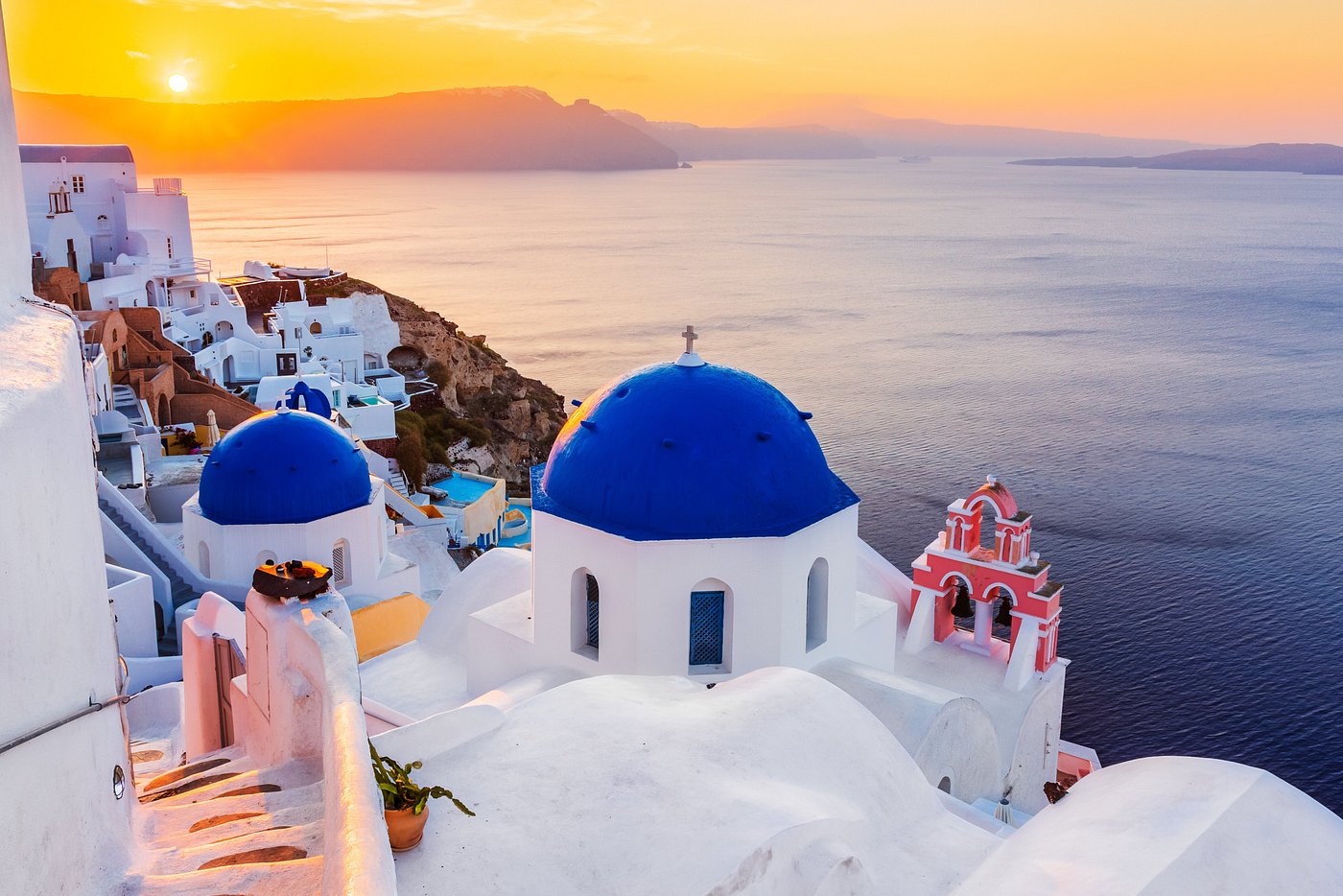
Santorini giving good scenery.

Over the past decade or so, Greece has tried to muster some vinous pride, complete with slick generic marketing, this courtesy of the EU subsidies that have kept the Land of the Big Olive afloat for the last 30 years. Dark, greasy, tights-wearing lads with five‑o’clock shadows haunt international wine shows, urging punters to try the wares at the Wines of Greece stalls. Sultry Ionian sirens in crisp togas proffer feta and half-glasses of sweet Commander wine, hoping to drum up interest. Like much of Greece: heavy on kitsch, light on class.

Top of the list of grape varieties the Greeks are promoting as a national wonder is Assyrtiko, a cultivar the international wine press has also seized upon, breathlessly praising the grape’s “electrifying energy” and virginal singularity. If Tim Atkin has committed a Report on Assyrtiko, you know it has reached the rarefied heights of critical adoration – not necessarily deserved.

Thing is, Assyrtiko’s reputation owes more to its supposed place of origin than to the grape itself, which is fairly neutral — nothing to provoke plate‑smashing and goat‑grabbing. Because who wouldn’t be bewitched by anything labelled Santorini? That volcanic lump of rock, festooned with glittering whitewashed buildings and 360‑degree views of the deep blue Aegean Sea, is irresistible.

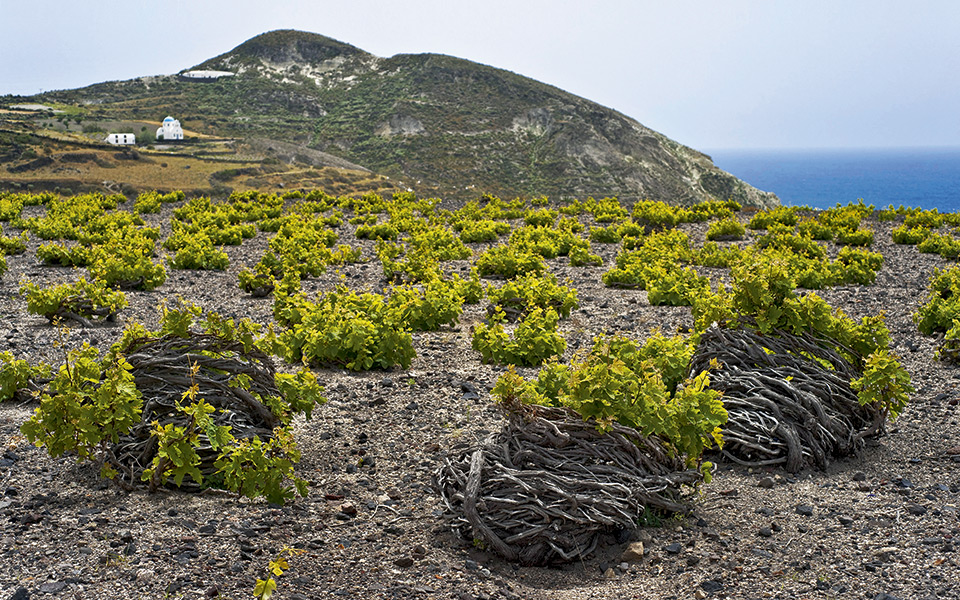
Vines on the island.

Despite hordes of Birkenstock‑and‑sandal‑wearing Germans, garish hotels and the omnipresent scent of coconut sunscreen and watermelon vapes, Santorini is seen as cute, off‑beat and authentically Greek. Here, a few withered old vines gasp in volcanic soils; they happen to be Assyrtiko, and from them the much‑vaunted Santorini wines are made — one of the wine world’s supposed “next big things”.

I didn’t think much of Santorini Assyrtiko when I worked on the island as a donkey‑handler for tourists too lazy to walk up from the port to the town, and my view hasn’t altered. Back then — four decades ago — I reckoned Santorini Assyrtiko resembled entry‑level KWV Steen, but with a sharper acid claw. Today’s wines are slightly better, with more structure and texture, yet remain as unremarkable as a lukewarm souvlaki bought outside Camden at three in the morning.

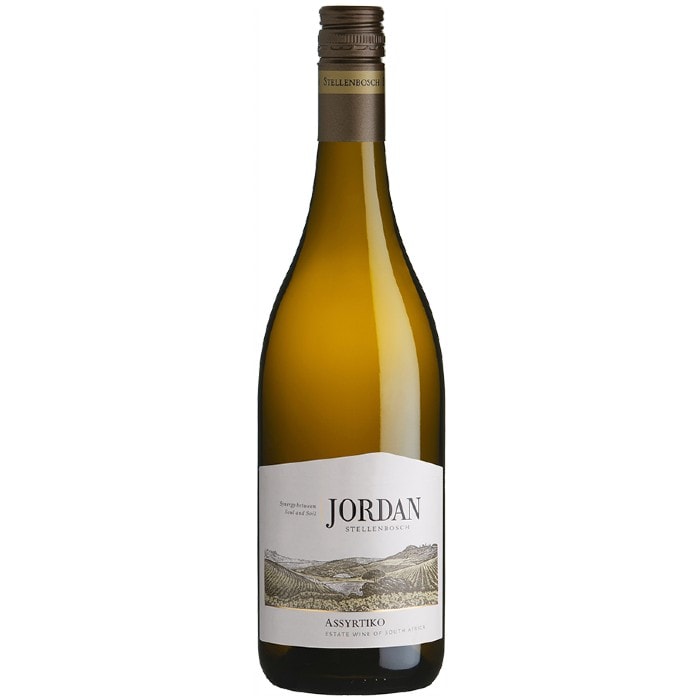
To see what Assyrtiko could be, travel some way south from Santorini: to South Africa, to Stellenbosch. At Jordan Wine Estate the first Assyrtiko block was planted in 2019 and, since 2024, winemaker Sjaak Nelson has been vinifying it into a thoroughly delicious white, thankfully devoid of the obvious Greek traits. (Although Sjaak’s hairdo and tattoos would not look out of place in the Athens district of the Plaka.)

Jordan Assyrtiko 2025 is fermented in stainless steel and spends a couple of months on the lees. The result is a well‑weighted white leading with traits not found in local South African favourites such as Chenin Blanc, Chardonnay or Sauvignon Blanc.

The real deal.

Unlike the fishy, saline residues that appear in many Greek Assyrtikos, Jordan’s wine is floral, pure and delicate, with punchy loquat and lime zest to keep things interesting. It is stony without being jagged, tropical without oiliness, and green without the lettuce‑and‑olive‑pit character of Santorini’s renditions. Beyond Santorini’s myopic singularity, Jordan’s Assyrtiko offers layers of lushness and a mannered sophistication that makes it, like actress Rosamund Pike, gluggable yet classy.

No, Assyrtiko is never going to be the world’s greatest variety, nor Greece’s answer to Portugal’s modern Alvarinho revolution. But the ease with which it has adapted to Stellenbosch and the pleasing way it has translated into the bottle again shows that South Africa is a wonder of a wine country. Seven years after first being planted there, and now producing a better wine than its ancestral home…this may be Greek to some, but for me it’s a no‑brainer.

Enjoyed this article?

Subscribe and never miss a post again.

Loading

Going Beck in Time with Pieter Ferreira

It takes time to recognise true mastery. In the 23 years that my path has regularly crossed that of Pieter Ferreira, I have come to believe he is the genuine master of South Africa’s sparkling wine tradition known as Cap Classique.

Ferreira is not called “Bubbles” for nothing. Just as Danie de Wet shaped the narrative of South African Chardonnay, and Beyers Truter is inseparable from Pinotage, so Pieter Ferreira is synonymous with Cap Classique. This South African interpretation of Champagne was first conceived in 1971 by the late Frans Malan of Simonsig Estate, and Ferreira has done more than most to define its modern expression.

He is equally entwined with the name Graham Beck, the rolling green winery outside Robertson founded in 1990 by the mining and thoroughbred magnate of the same name. Ferreira was there from the outset as winemaker, and retired earlier this year after 35 years in the role. In that time, he helped build Graham Beck into what is, in my view, South Africa’s leading Cap Classique cellar, judged by volume, stylistic breadth, consistent quality and the formidable presence of the brand.

“I think the success comes down to Mr Beck’s original vision,” says Ferreira. “I was the young upstart fresh from Haute Cabrière, alongside two industry veterans, production manager Gary Baumgarten and the legendary marketer Jacques Roux. Mr Beck had one message only: he wanted the finest possible expression of South African sparkling wine from that cellar. With his boundless energy and his refusal to accept the words ‘no’ or ‘impossible’, he led us all towards that goal. I am grateful that before his death in 2010, he could see his Cap Classique dream realised.”

Roux, who established the Graham Beck market both locally and abroad, believes Ferreira’s role in that success is beyond debate. “The label may have said Graham Beck,” he notes, “but the quality and style in the glass after the cork flies is pure Pieter Ferreira.”

Ferreira’s first corks were pulled at Haute Cabrière in Franschhoek, where he began working in 1983 under the late Achim von Arnim. Born in Durban, Ferreira was not formally trained as a winemaker. He studied microbiology and botany at the University of Pretoria and was working for the Citrus Board when chance and youthful decisiveness led him into the Cap Classique cellar at Haute Cabrière.

That early fascination with sparkling wine was reinforced by visits to Champagne itself. “What captivated me from the start,” he says, “was the role of the bubble. There are said to be 49 million bubbles in a bottle of Cap Classique or Champagne. That sparkle defines the wine’s character because it amplifies aroma, flavour and texture. That is why making Cap Classique is the most technically demanding form of winemaking. You first create a base wine that reflects the intended style, then comes the second fermentation in bottle, where the bubbles are formed and lees character develops. It is a long, complex process that demands both technical precision and sensory judgement.”

Ferreira’s restless pursuit of refinement, and his willingness to adjust and challenge established practice, helped cement Graham Beck’s leadership in the category. Zero Dosage bottlings were released without the traditional sugar addition. Selected base wines were matured in oak and concrete eggs to add dimension and depth.

Yet, as Ferreira is quick to point out, everything begins in the vineyard. South Africa’s diverse wine regions offer distinctive expressions of Chardonnay and Pinot Noir, the cornerstone cultivars of Cap Classique. Cool Darling provides piercing acidity, Stellenbosch contributes ripe citrus tones, while Graham Beck’s own limestone-rich vineyards in Robertson deliver notes of lime and pomelo.

Within the wine community, Ferreira’s contribution is multifaceted. Warm, affable and endlessly engaging, he is as likely to leave you smiling as he is to steer the conversation towards a particular vintage or sparkling wine style. In an industry where charm and enthusiasm are essential tools, he has played a major role in elevating the stature and credibility of the Graham Beck name.

There is, too, a rigorous scientific mind at work. Ask a simple question about extended lees contact in Chardonnay-based Cap Classique and you may soon find yourself deep in discussions of autolysis, pH stability and acid dynamics.

As long-serving chairman of the Cap Classique Association, Ferreira continues to play a leadership role, hosting technical workshops that explore new trends, developments and possibilities for producers.

According to Joaquim Sá of Amorim, which has co-hosted the annual Amorim Cap Classique Challenge since 2002, Ferreira has been instrumental in raising quality across the category. “His depth of knowledge, his relentless drive to improve and his openness to new techniques command respect,” says Sá. “His passion inspires not only winemakers, but writers, sommeliers and anyone serious about South African wine.”

Ferreira himself puts it simply: “I am still searching for the perfect bubble. I know I will never find it, because then the dream would be over. But it is a lifelong pursuit, and one I will always follow.”

Only a true master understands that there is always more to learn.

Enjoyed this article?

Subscribe and never miss a post again.

Loading

No Easy Wine Passage to India

To rephrase Winston Churchill’s description of Russia, I think of India as a dream wrapped in a vision cloaked in a miracle and tied to a seduction. Hence my observation, during a recent visit to this land of wonder and grace, that a culture of wine appreciation is making difficult headway here.

Only when one is there, experiencing the subcontinent’s marvellous onslaught on the senses, does it become evident just how challenging wine’s place in India truly is. The country may be one of the world’s great economies, with tens of millions of people entering the middle classes each year thanks to GDP growth of between 5% and 7%, and Indians are no slouches when it comes to indulging in the free market’s consumer-goods offerings. A marketer’s dream, for sure: a well-educated nation not averse to spending money on food and travel; clothing and cars; entertainment and dining. And yet, somehow, wine has missed the party in this bejewelled, intoxicating part of the world.

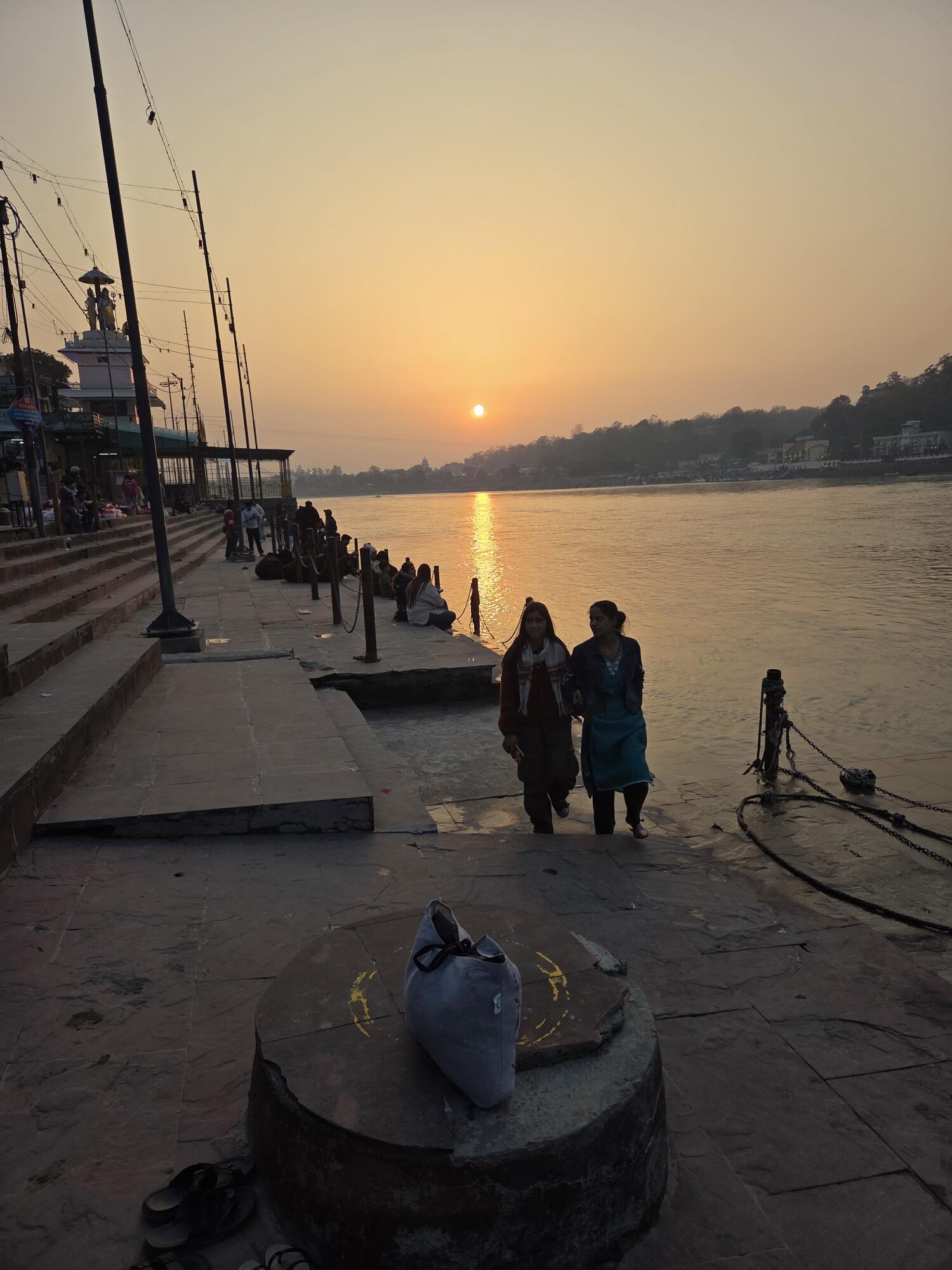
The Ganges at Rishikesh.

While some 6.5 billion litres of alcohol are consumed in India annually, less than 1% of this is wine. Surprisingly so in a society that is gregarious and hospitable, outgoing and social, as well as sophisticated and cultured while remaining deeply fun-loving. Indians know the “West” as well as so-called Westerners do, being enormously educated, well-read and curious, and open to fashionable consumption patterns shared by Europeans and Americans.

One might have thought that the colonial vinous influence of the Raj — British occupation from 1848 to 1947 — would have left at least a few rivulets of wine appreciation running along the manicured pathways of Delhi’s Lodi Gardens or the walkways of Connaught Place. Surely India’s energetic consumption world news, trends and fashion would long ago have seen the global wine culture catching on in India? But, as the figures show, this is not the case.

Reasons abound as to why wine barely plays even a bit-part in slaking the Indian thirst. Hefty import tariffs and a complex distribution network are often bandied about, but these do not appear to hamper India’s love affair with whisky. Here, India is the world’s largest consumer of the spirit — some 1.5 billion litres a year — almost double that of wine. Indeed, a visit to a hotel bar or restaurant often leaves one perusing a Scotch whisky list that far outweighs the wine offerings.

Other spirits are also keenly sipped: gin — unsurprisingly, as India is the birthplace of the G&T — tequila, Cognac and rum following closely behind whisky. And a cold beer is ubiquitous.

My own experience in India is that wine finds gaining traction difficult because anyone living in or visiting the country is subject to a wondrous, heady sensorial overload. Wine’s appeal to Westerners lies in aroma and flavour, and when consumed alongside the culinary offerings and social environments of Europe, America and Australia, its charms easily rise above the comparatively muted sensorial backdrop of those Westernised surrounds.

In India, however, wine’s appealing features must compete with a continuous assault of flavours and aromas that can make even the most complex white Burgundy or deepest Bordeaux taste and smell decidedly dull.

There are the broad, straight avenues of Delhi, lined with dense, evergreen trees that make the air smell of forest and meadow. Walk barefoot across the expansive floor of the Jama Masjid mosque in Old Delhi and a sudden shower of rain sends the icy, cavernous scent of wet marble drifting into the air.

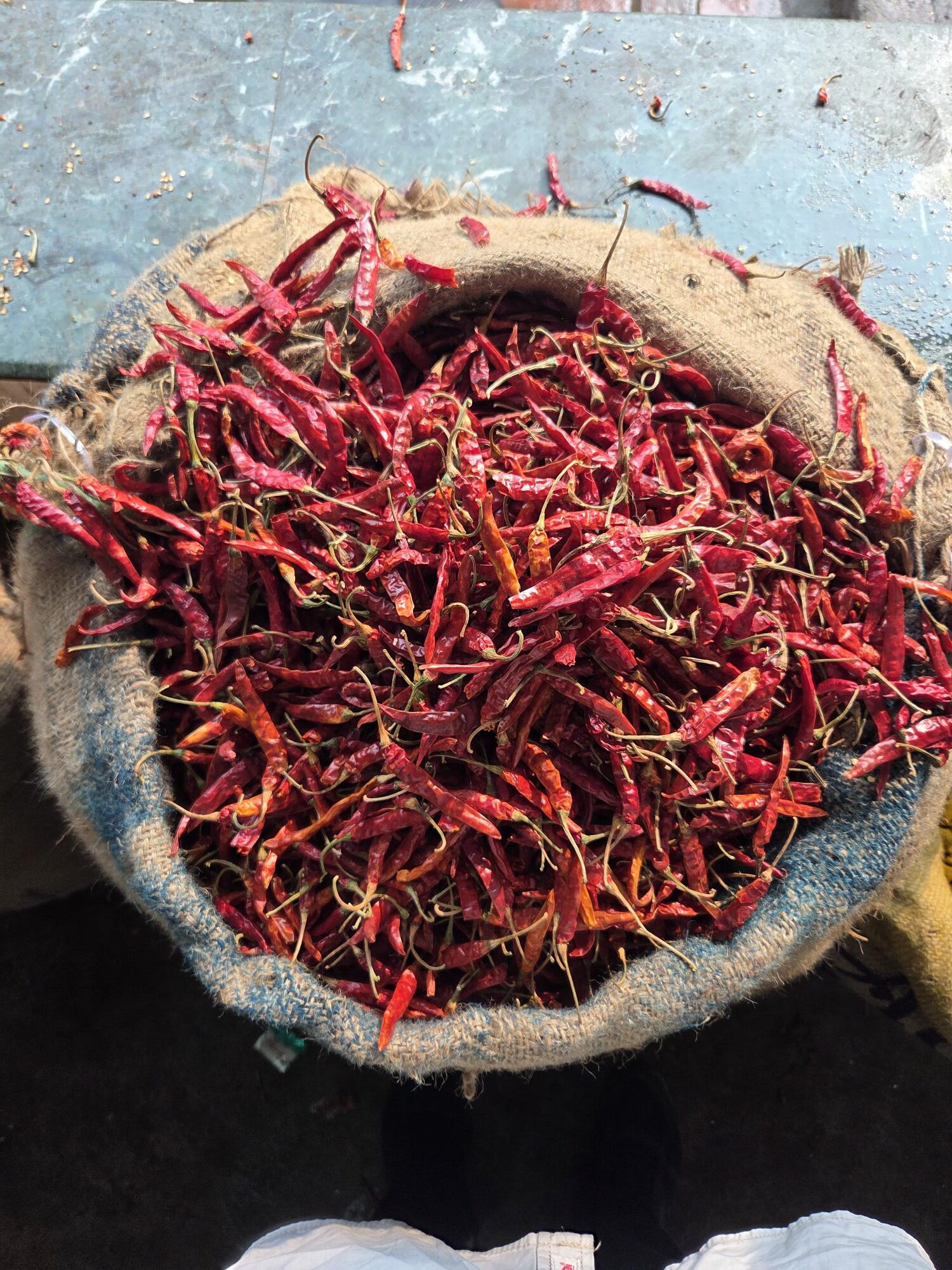
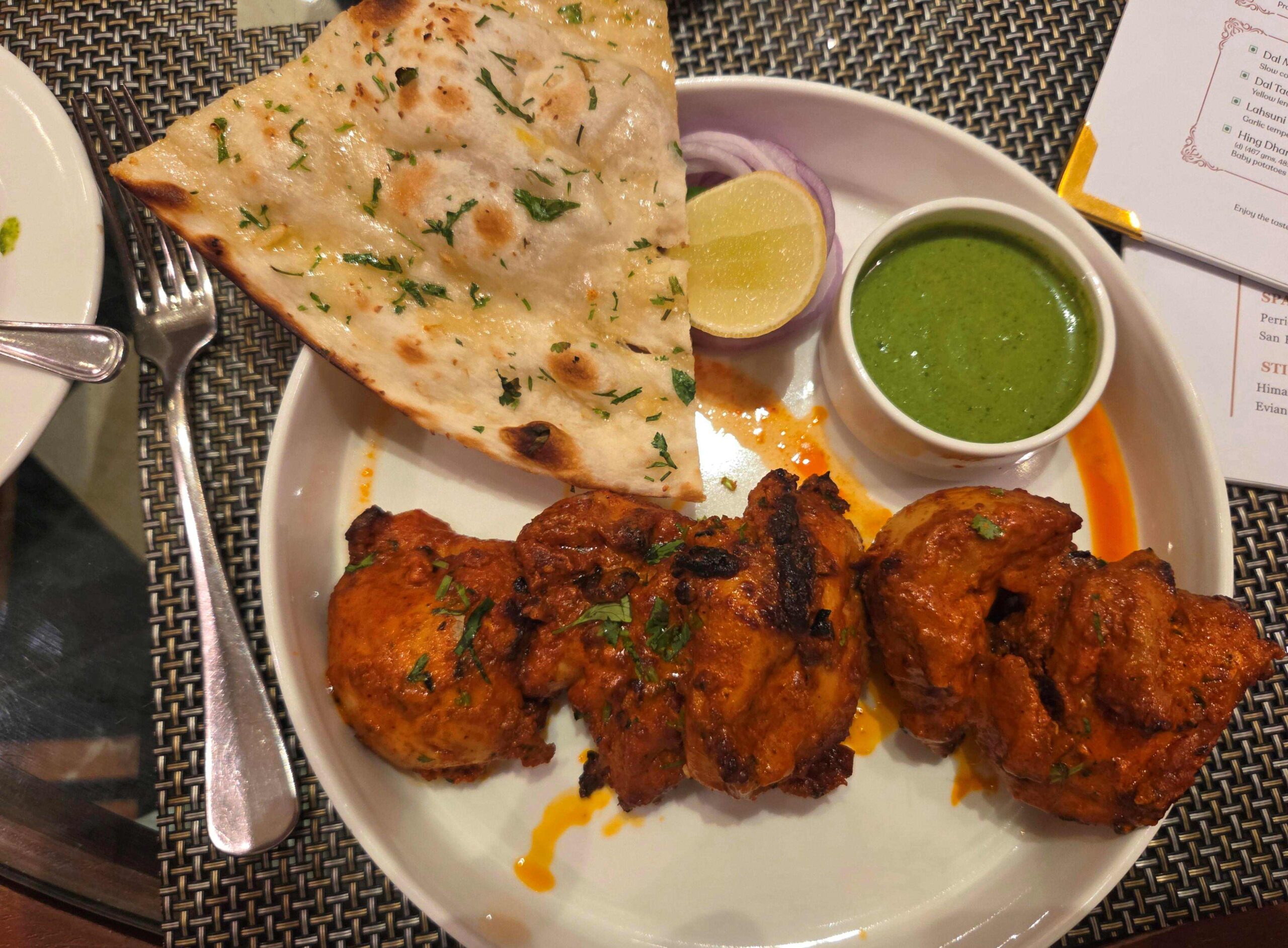
Through the narrow lanes of the old markets, the olfactory senses are overwhelmed by aromas you can cut with a Sikh sword: fresh red chillies squashed underfoot; cinnamon, clove, saffron and lemon rind; perfumed cloth and incense emanating from the garment quarter; the toasty scent of naan breads cooking over coals; cardamom crushed for the making of salt lassis.

There is the pure, fresh scent of the Ganges flowing through Rishikesh, a maritime aroma without the salt, sharpened by the charcoal-lit lanterns carried by Hindu priests.

Eat curried food twice a day and the sense of taste gradually becomes saturated by flavours sharp and dense, exotic and expansive. Tandoor lamb, succulent and edged with sharp vinegar, offset by turmeric, garlic, chilli, cardamom and fenugreek. Buttery-soft balls of paneer cloaked in a creamy, densely spiced sauce with traces of fresh sage. Sweet prawns the size of small kittens, poached in fragrant liquor and served with a vivid garnet coating of Goan vindaloo.

No, contrary to popular belief, food on Indian soil is not hot, fiery and overpowering. The curries are exciting and sating, generous in spirit. Flavours that entice through their marriage of the exotic and the comforting.

And gloriously, there are no multi-coursed, speckle-portioned fine-dining menus. Orders are placed with monosyllabic assurance before the table is covered in naan and paneer, dhal and parantha, bright curries cloaked in shimmering sauces of red, rust and saffron. Eating is done with wanton abandon amid expressive conversation, shreds of naan pressed into service as spoons.

Here, the drink must match the hungry camaraderie and flavourful abundance of the food. Polite sips from wine glasses simply are not copious enough. Cool gulps of salt lassi became my preference, as did deep chugs of icy Kingfisher beer. A double Scotch with ice and soda proved a pleasing companion to a plate of steaming, saffron-flecked chicken biryani.

Any wine hoping to make meaningful inroads into this land of sensual wonder will have to put big flavour first. This is not a country of meekness and sensorial restraint— especially not when it comes to taste. And when it comes to magic, I’ll make mine Indian.

Enjoyed this article?

Subscribe and never miss a post again.
Loading

Theuniskraal Riesling: Classics never grow Old

Here’s the thing about Theuniskraal Riesling: it doesn’t care what you think about it. And that, right there, is why I love it. Love this ubiquitous wine from Tulbagh that has been as long a part of the South African wine landscape I can remember, and then some.

It’s not written about, talked of opined on: But it is there. Just there. Theuniskraal Riesling just shows up, pours itself a glass, and gets on with the business of being a delicious appealing glass of vino blanco. No fuss. No theology. No Instagram sermon about terroir delivered in hushed, reverential tones by some agency chick wearing fuck-me stilettos that cost more than your first car.

This is wine that knows exactly who it is. And more importantly, who it is not.

Let’s rewind. Theuniskraal Riesling – more properly Cape Riesling, made from the Crouchen Blanc grape – is not some recent marketing brainstorm dreamt up in a glass boardroom overlooking vineyards and spreadsheets. It’s been around for nearly 80 years. Eight. Zero. In South African wine terms, that’s not heritage; that’s fossil record.

In 1948, Theuniskraal became the first South African white wine to bear the word “estate” on its label. Not because of a focus group or a branding exercise, but because Dr Anton Rupert – yes, that Anton Rupert, founder of Distillers Corporation in 1945 – told them to. Full stop. Because the Doc deemed it a wine fit for geographical identification and geographical reverence. A proud kid in the Distillers stable.

That single word “Estate” quietly shifted the conversation around provenance and origin in South African wine, long before anyone was throwing around phrases like “sense of place” with evangelical zeal.

But here’s the kicker: despite that quietly revolutionary pedigree, Theuniskraal Riesling never developed a superiority complex. It didn’t disappear into allocation lists or rebrand itself as something cryptic and expensive. It stayed available. Affordable. Drinkable. Human.

And drinkable it really is.

This wine clocks in at a sensible 12% alcohol. Not 14.5%, not “wait, am I still allowed to drive?” strength. Twelve. The kind of alcohol level that says, “Relax, we’re here for the long haul.” It’s fermented at a cool 14°C in stainless steel, with no wood anywhere near the operation. No barrels, no toast, no vanilla cosplay. Just clean, honest winemaking that lets the grape and the place do the talking.

The result? A bright, cool, refreshing white wine that feels like a breeze off the ocean when the sun’s been beating down too hard. It smells of melon and summer lemons, with that faint, nostalgic note of sun-baked hay, the kind you can taste in an Andrew Wyeth painting. The acidity is firm, awake, and useful, but it stops well short of punishing you. This is not the kind of acid that makes your dentist nervous or your kidneys file a formal complaint.

It’s a wine with manners.

And here’s where Theuniskraal Cape Riesling really shines: it understands food. Not “paired with a deconstructed reduction of something abstract” food. Real food. Actual eating.

Seafood lunches? Absolutely. Prawns, calamari, oysters pulled straight from the ocean and eaten with sandy fingers and ugly mouth-sounds. This wine gets it. It doesn’t interrupt. It refreshes, resets, and politely asks for another bite.

‘Christina’s World’, by Andrew Wyeth.

Smoked salmon bagels for breakfast? Yes. Breakfast. Don’t clutch your pearls. This is a wine that shows up early, before the world has fully woken up, and says, “Let’s do this.” The citrus cuts through the fat, the coolness keeps things civil, and suddenly you’re wondering why anyone waits until sundown to drink white wine.

This wine, it doesn’t want to be discussed in whispers or dissected like a lab specimen. It doesn’t need a decanter, a monologue, or your undivided attention. It wants to be poured, shared, argued over, maybe spilled a little. It’s a lifestyle wine in the truest sense: not aspirational, not performative, but lived-in, and itself living.

I reach for Theuniskraal Riesling often. Not because it’s rare or fashionable, but because it delivers. Every time. It’s reliable in the way your favourite café is reliable: the one that doesn’t change the menu, doesn’t chase trends, and somehow still gets better the longer it sticks around.

In a wine landscape increasingly cluttered with noise and fads and “new narratives” Theuniskraal Riesling stands as a reminder that greatness doesn’t always announce itself. Sometimes it’s been sitting on the shelf for decades, quietly doing the right thing, waiting for you to stop overthinking and start drinking.

Enjoyed this article?

Subscribe and never miss a post again.
Loading

Putting Cheese to Wine with a Cape Wine Master

When the word “wine” is mentioned and one is asked for an edible companion for this drink of joy, “cheese” is arguably the most common answer. Cheese and wine have for decades been referred to in the same vein as horse and carriage, love and marriage, and braaivleis and rugby.

Those with memories harking back three to four decades will remember the “cheese and wine” parties, soirées and cocktail gatherings as immensely popular social events. When Stellenbosch and other wine regions embarked on wine tourism in the 1970s, cheese was the first food item to be offered as a complement to these early cellars’ hospitality initiatives.

And like wine, South African cheese has come a long way since those days. Gouda, also known as “soetmelk”, and Cheddar were once the only two cheeses on offer. And while not quite as limited as their dairy counterparts, Cape wines, too, were 40 years ago hardly generous in their diversity of offerings. When the Stellenbosch Wine Routes was founded in 1971, there were just over 10 members producing wine, compared to today’s 200.

René Groenewald CWM

Today the country not only has a spectacular array of wines made from various grape varieties, with diverse flavour nuances gleaned from the Cape Winelands’ many terroir pockets, but when it comes to cheese, consumers are also spoilt for choice.

Supermarkets offer excellent ranges of local and imported cheeses of all styles, aromas and textures, and South Africans themselves are producing artisanal cheeses with the same degree of commitment, love and expertise as their winemaking counterparts.

I remember the days when one had to seek out a specialist delicatessen at the lower end of Cape Town’s Long Street in order to procure a rare wedge of Italian Parmesan cheese. Today you only have to pop into a supermarket to find a whole array of Italian dairy delights, with even the checkout lady pronouncing “Grana Padano” in an accent to make a Milanese nonna proud.

This all makes for great times to be a South African cheese and wine lover, of which I confess to being one. However, is cheese truly the best partner to wine? And if so, which wine varieties and styles would present a sensorially satisfying match?

Dissertations, tomes and opinionated books have been written on the pairing of cheese and wine, although it is not so complicated. Because, as with all things wine and culinary, the only opinion that matters is that of the person eating the cheese and drinking the wine.

To illustrate this, I embarked on a taxing fact-finding mission with an expert. Namely, René Groenewald. Her expertise on the wine side is that of being a Cape Wine Master, South Africa’s top qualification in the field of wine knowledge. But wait, there’s more – René, who works in product development for Woolworths, is also recognised as somewhat of a cheese fundi. This through her work at the retailer, as well as judging cheese competitions in South Africa and France. I pestered her for opinion just as René had returned from judging the Mondial du Fromage competition in Tours, France.

We selected four cheeses, readily available in South Africa, did some rigorous wine-tasting and cheese-chomping, and tried to ascertain whether there was some synergy and agreement as to recommending wines to accompany the diverse cheeses. The results prove something I have always believed, and that is that personal taste lies in the taste buds of she or he who is responsible for deciding what is appropriate for ingesting and imbibing.

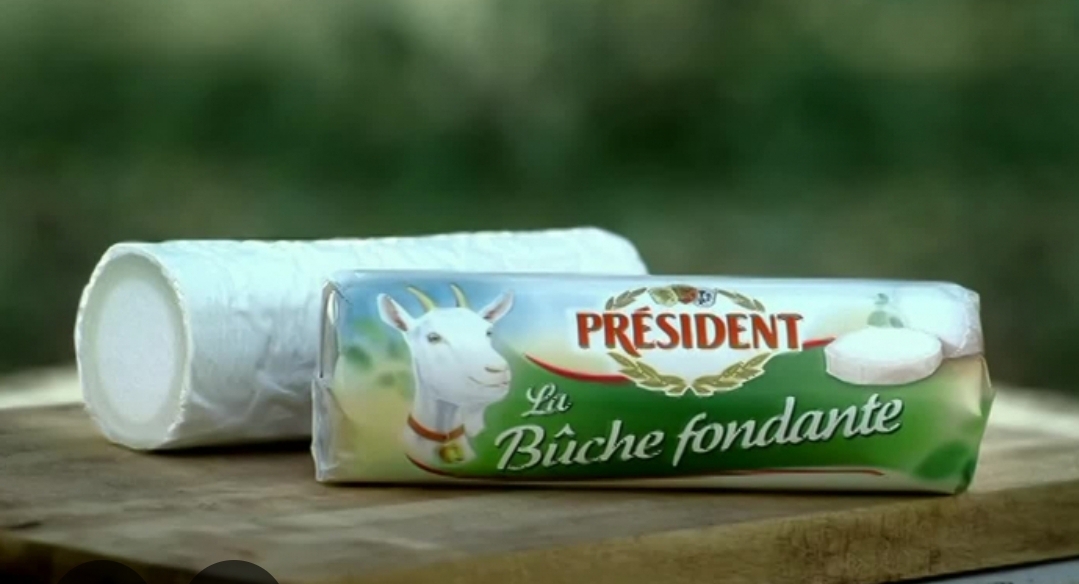
The first cheese up was a goat’s milk number, from France nogal, and goes by the name of La Bûche Fondante. René’s wine of choice to match with this creamy, mild cheese was the High Hopes Syrah/Grenache 2024 from Lukas van Loggerenberg. Her impression is that this perfumed red wine has a generous, soft and round mouthfeel that never overwhelms. Also, “the creamy smoothness of the goat’s cheese softens the wine’s warmth and spice, creating a lush, balanced mouthfeel.”

Personally, I loved this cheese: dense and silky and velvety, with a saline lick and none of the wild goat-pen flavour that too many South African goat’s milk cheeses show. But then again, the French do have centuries of fromage culture on us.

But a red wine with this cheese, even one so immaculately put together by Lukas van Loggerenberg, was for me a bit overwhelming for the cool, smooth and pastoral-tasting chunk of dairy I spread on a crusty baguette. It screamed “white wine”, and here a complex Chardonnay such as the one from Meerlust was just the perfect wine with which to enjoy the cheese. The slight acidic hit on the dairy allowed the Chardonnay’s richness to come to the fore, bringing white fruits with which to accompany the goat’s creamy, dense offering.

The next cheese was my choice, as Cheddar is – no matter what the French or Italians say – one of the world’s great cheeses. But, as we Cheddar fans have found out to our dismay, not all Cheddars are created equal. Some of the Cheddars finding their way onto supermarket shelves are made in immense volumes due to this cheese’s popularity, resulting in putrid, lifeless slabs with notes of drawing crayon and rubber inner tubing.

Mature Cheddar is what you want, and the Woolworths 18-month matured number is more representative of what Cheddar should look and taste like: crumbly, salty, strong, with a palate-coating, hearty presence.

Cape Wine Master René deems a Pinotage from B Vintners to be a suitable wine to sip while munching on this Cheddar. “Power meets power,” she reckons. “Cheddar, mature like this, gains an umami intensity through the 18 months of ageing. This is made more delicious with the Pinotage, this wine being deeply flavoured with ripe dark fruit, a smoky earthiness and subtle spice. There is a savoury energy as the smoky, earthy tones of Pinotage echo the nutty, caramelised depth of mature Cheddar, creating a seamless flavour bridge.”

While agreeing with this eloquent assessment of the cheese requiring a bold wine, I am tempted to up the ante and suggest a Boplaas Tawny Port to truly create an orchestral moment on the senses. This crumbly, assertive Cheddar, with its almost Bovril-like saltiness and evocative shards of concentrated dairy, is taken to a totally new level when the sweet, nutty flavours of a Tawny Port are brought into the equation. Perhaps it is just the kid in me who likes to bring sweet and salt together, but the heady, expressive and almost decadent combination of a great Cheddar and a very fine Tawny Port is the stuff of which gastronomic dreams are made.

Tawny Port spends – depending on the style in which it is made – years in old oak barrels and has a different colour and flavour profile from Vintage, Ruby or LBV Port. The sweet is sweeter, the acid a bit brighter, and its experience with a formidable Cheddar is truly immense.

From Cheddar to the other ubiquitous yellow cheese, namely Gouda. This, a 10-month matured cheese from the Klein Karoo.

This time I am going first, and without a doubt my wine to go with Gouda is a Riesling from Paul Clüver Family Wines in Elgin. With regards to the cheese, this Gouda has attitude: deep caramel notes, a savoury nuttiness, and those delightful little crystals that crunch between your teeth. It’s rich, dense and – like a Dutch insurance salesman – unapologetically bold.

Riesling is a wine presented in diverse flavour profiles, and the last thing you want here is a wine of the cloying kind. Paul Clüver’s number is well balanced, with racy acidity and a hint of sweetness. That acidity slices cleanly through the Gouda’s fat and salt, while the wine’s fruit notes of green apple and lime just brighten every bite. The residual sugar plays beautifully against the cheese’s sharpness, softening it, lifting it.

As can be predicted by now, René’s wine suggestion for the Gouda is a red wine, namely the Rock of Eye Cabernet Sauvignon from Coenie Snyman.

“Richness meets structure,” is her succinct introduction. “Cabernet Sauvignon is classic and powerful, a wine of depth, confidence and structure.” On its suitability to ingest with this aged Gouda: “The creamy fat and light sweetness of the cheese coat the palate, softening the wine’s firm tannins and revealing its fruit core.” Suggestion: “Serve the cheese at room temperature and the red wines below room temperature for ideal texture and aromatics.”

I suggested ending on a high, so requested a blue cheese. Mouldy cheese infers that the product has been aged, as well as confirming that, like wine, cheese is a natural and living thing.

Cremezola is a soft blue-veined cheese from Austria, and despite her conservative red wine focus, René goes rogue by suggesting that a Cap Classique sparkling wine will do nicely in this instance. The wine is the Pinot Meunier Agrafe Cap Classique from Graham Beck.

For her, this is a “refined and unconventional, but well-tested pairing”. The mild, creamy blue cheese is more on the rich side than it is pungent. “The Cap Classique shows expressive apple skin and pear character, with a luxurious, fine mousse of bubbles, and is complex in flavour and structure due to the extended lees ageing the wine underwent during its secondary fermentation.”

René’s tagline for the combination of Cremezola and Cap Classique is: “contrast and harmony”.

“The creamy saltiness of the blue cheese finds lift and freshness in the Cap Classique’s acidity, structure and effervescence, ensuring a palate-cleansing contrast that enhances both the cheese and wine – trust me!”

I must say, this fizzy wine and mouldy cheese combination hit my spot as well, and I will be engaging in this pairing with eagerness and delight. But my personal suggestion for a wine to strut alongside this style of cheese is a classic Pinot Noir, something like Anthony Hamilton Russell’s, and a bottle that has been permitted to mature for five years or more.

The cheese is subtle, salty and creamy, but not devoid of the enchanting, gloomy, feral mouldy depth. And so a good Pinot Noir works splendidly, as this wine variety, too, has an autumnal forest wild edge to it. What the cheese does is amplify the beautiful layers of fruit found at the core of Pinot Noir, opening the door to a plum orchard, casting a glowing light on the cheese, and creating a decadent, heady combination.

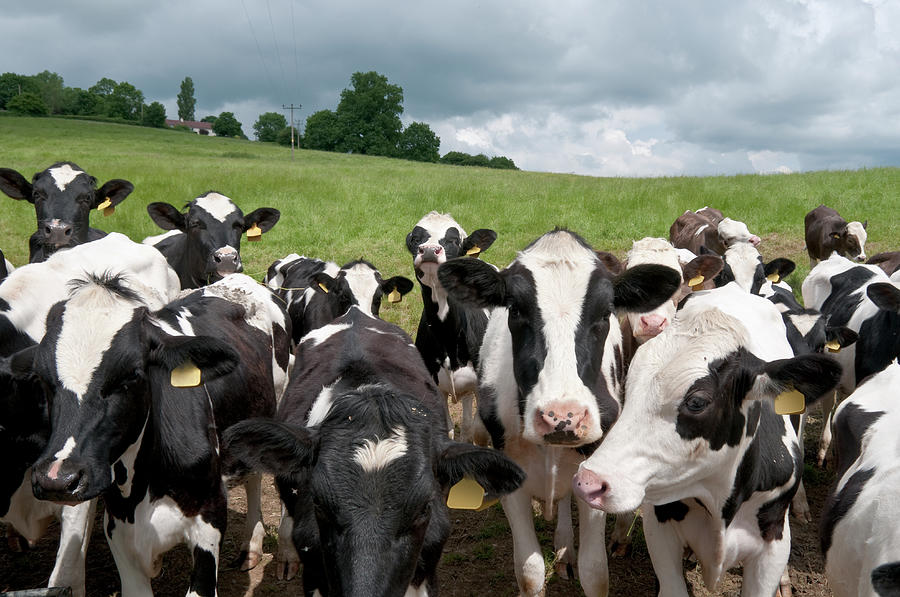
It is tradition for wine lovers to bless the grapes, but never forget the cows, goats and sheep, because they make of wine a thing of greater wonder.

Enjoyed this article?

Subscribe and never miss a post again.
Loading