An Aroma of Life

Smell is the sense that gets to you first and leaves last. It sidesteps reason, memory and good manners and goes straight for the jugular. There are a handful of smells that reliably undo me. The Cape’s cold Atlantic air, salted and metallic, with ghostly traces of mussel shell and feral female mating instrument. A Karoo dirt road after the first drops of rain, dust briefly remembering it was once alive. A dachshund puppy, improbably exhaling the comforting aroma of sweet coffee, as if it’s already lived a better life than you have.

Seeing may be believing, but smelling is understanding. It delivers, without argument, the overwhelming splendour of being alive.

And now it is harvest in the Cape winelands. As I write, the Boland sits under a sky of impossible, almost vulgar blue, while the air is thick with the unmistakable scent of grapes at the moment of their demise. Fruit born in September, pushed out with the vine’s first green optimism, which then spent the long, hot summer pulling sugar, juice and ripeness from sun and soil alike, has been cut down. Berries severed from stems. One life ends so that another, more interesting one, may begin.

This is where wine is born: sweet, sticky juice sluicing into tanks, barrels and – these days – concrete eggs and clay vessels, because winemakers are nothing if not romantics with spreadsheets. Here, nature performs its most persuasive sleight of hand, eating sugar and excreting alcohol. Innocent, cosseted vineyard fruit is converted into something worldly, adult and faintly dangerous.

The smell is irresistible. Drive with the window open between Stellenbosch and Wellington and the vapours of fermenting grape juice roll into the car like an invisible tide. You don’t merely look at the vineyard landscape, postcard-perfect as it is; you absorb it. It seeps into your chest. And if you care about wine at all, you become uncomfortably aware that it shares something with you. A temperament, perhaps. Or a soul, if you’re prepared to forgive the indulgence.

Winemakers are among my favourite people. Not just for their easy unforced hospitality and their alarming tolerance for long lunches, but because they are, quite plainly, magicians. Alchemists with dirt under their nails. They take offerings from vine and earth and turn them into bottled miracles that millions of people quite reasonably regard as one of life’s great consolations.

To them, much of this is routine. To the rest of us, it remains a small miracle. And wine should always retain that sense of wonder; the moment it becomes a rattled-off commodity, it has already failed.

Consider the business of skin contact in red wine: the punch-downs and pump-overs, acts of gentle violence essential to the final result. I can happily sit for hours beside Kanonkop’s open concrete tanks, watching a heaving mass of Cabernet Sauvignon and Pinotage skins – purple-black, brooding, faintly menacing – floating atop the fermenting juice. Tiny bubbles fizz up through the crust like burping angels. Every couple of hours, someone arrives wielding a pole with a flat board attached and forces the skins down into the liquid. When they rise again, slick with ink-dark juice, they glitter like black stars hauled briefly from the deep.

The smell at this point is not shy. It’s profound and engulfing: sweet fruit, sharp acidity, a sudden aromatic bloom that hangs heavily in the cellar air, as if gravity has briefly been suspended.

This is how red wine comes into existence. Colour leached from skins. Tannin extracted to give grip, persistence and seriousness. Mouthfeel, weight and structure quietly negotiated. That something so apparently crude – pushing skins through juice – can dictate the fate of a wine remains one of the great quiet marvels.

Then there is the barrel. Oak trees grown for nearly two centuries in French forests before being felled without ceremony. The wood is sawn into staves and left outside for years, enduring sun and frost until its raw greenness is beaten out of it by weather and time. Only then do craftsmen, broad-shouldered, taciturn, unimpressed by theory, coax the staves into barrels. Handsome things the barrels are, with reassuringly sensual curves and the air of holding opinions.

Back in the Cape, Chardonnay juice is poured into these barrels and left to ferment in darkness, unseen and unbothered. For a year the wine sulks, settles, stretches its limbs. At first, vineyard and oak may bristle at one another. But they learn. They compromise.

The barrel guards the wine’s citrus, nut and floral notes with almost jealous care, preserving the vineyard’s sense of place: its terroir, that word people pretend to understand. And in return, the wood offers texture, depth and quiet complexity, lending the wine a sense of gravitas without bullying it.

All of this unfolds under the watchful, opinionated eye of the winemaker, whose senses are as important as any instrument. To witness it, to drink the result, is not merely pleasurable. It is a privilege. One shared from human to human, with nature and culture in between.

Enjoyed this article?

Subscribe and never miss a post again.
Loading

Where the Cows always Come Home

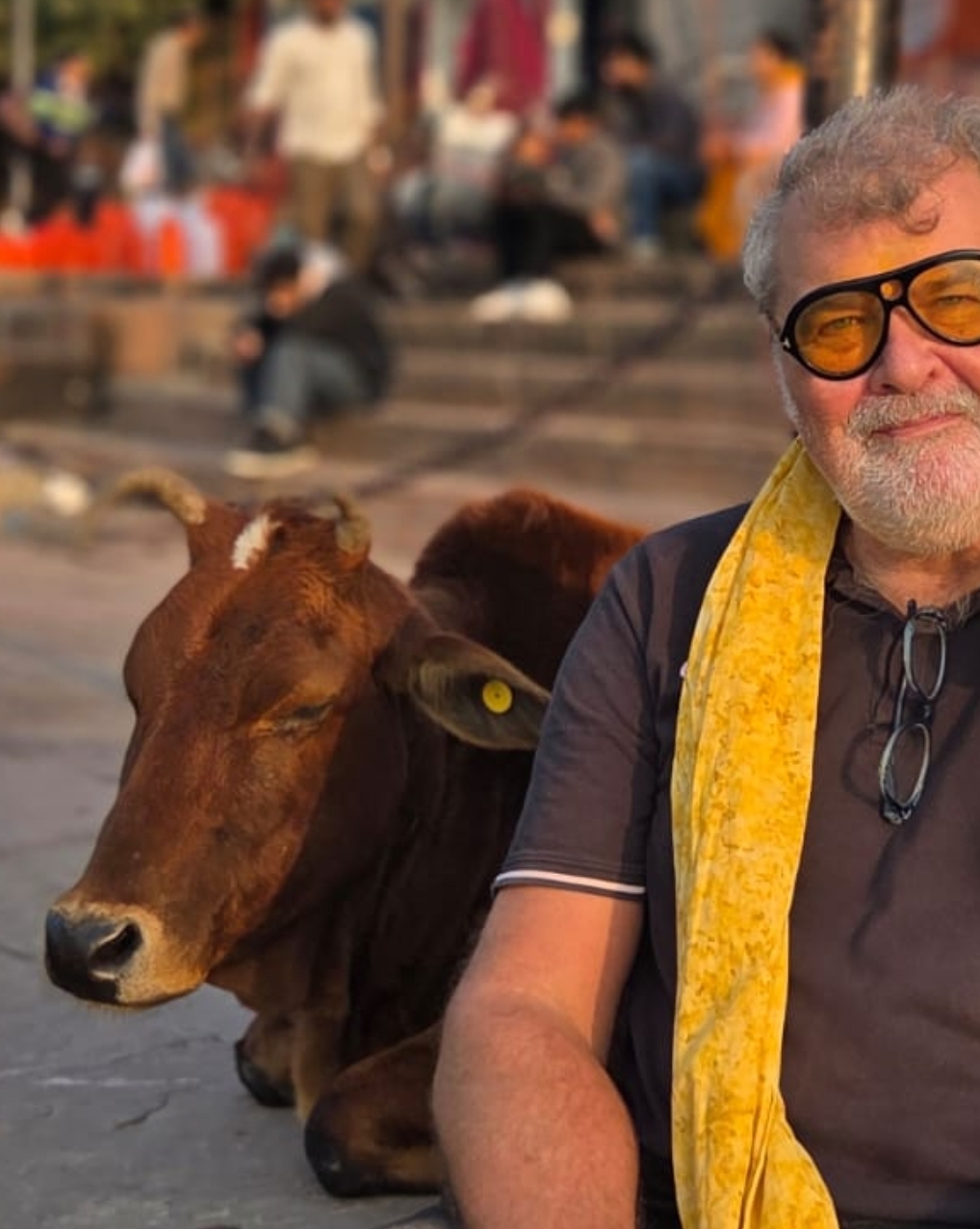
The Hindu priest ends his prayer and casts two handfuls of yellow marigolds onto the eddies of the Ganges, and then the cows arrive. Like the river itself, along whose banks prayers have been offered daily for more than five thousand years, here where the Ganges flows through the northern Indian town of Rishikesh, the cows and bulls are endowed with sacred status.

For Hindus, the Ganges is a goddess: a cleanser of sin, a giver of spiritual release, a benevolent guide to the next world. And at Rishikesh, a gateway to the Himalayas, she looks every inch divine. She is a handsome body of water, broad and unhurried, yet with a palpable force pressing beneath the ice-blue, grey skin of her surface.

The cows and bulls sprawled on the sandbanks and stone steps along the river share in this holiness. To injure a cow, or worse, to kill one, is a mortal sin. And so, they take their place in the world with dignified calm and the assuredness of their sacred status: halting traffic on busy highways when two cows decide to lie down on the warm tar; wandering unperturbed through markets, nibbling at piles of sweet potatoes, mangoes, and red Indian carrots.

A cow heavy with calf stretches out on her side, eyes closed in bliss, while a stallholder scrubs her hide with a broom dipped in soapy water. Two little girls in yellow saris scramble up onto the solid hump of a reclining grey Brahman bull, who gazes dreamily toward the river. One child walks straight across his neck, giggling, and the bull answers with a gentle, accommodating rumble.

When the evening prayers along the Ganges are finished and the marigolds have blessed the water, every bovine in the vicinity turns up in search of a final mouthful of flowers to end the day. Bulls and cows move calmly through the crowds who have gathered to watch the ceremony.

Some pluck blossoms from the still water; others settle among the worshippers and a scattering of tourists. Their hooves click on the stone, and the animals sigh with pleasure and contentment, as if they know themselves to be part of the occasion.

A brown-and-white cow with short, curling horns comes to a halt beside me, her head level with my chest. The farmer in me takes over: I reach out and give her a proper, hearty scratch between the horns. She yawns. A long, thick, pale-pink tongue lolls from her mouth. Beside us, the sinking sun paints the river gold and rose.

Two barefoot boys step up in front of the cow, each holding a tin bowl. I do not want to spoil the moment, but I have no alms with which to tinkle their cups. I shake my head. The boys are untroubled. They crouch, slip beneath the cow, and I hear the warm frothy sound as jets of milk strike the metal bowls.

Enjoyed this article?

Subscribe and never miss a post again.

Loading

Delheim Iconoclast: A White Blend of Hope

by Lafras Huguenet

There’s something deeply suspicious about wine ranges named after dead people. They tend toward the maudlin, the reverential, the sort of hushed-tone hagiography that makes you want to drink beer out of spite. But the Delheim Iconoclast, named for the farm’s late pater familia Spatz Sperling, who moved mountains for Cape wine, is different. This wine is no memorial. It’s a middle finger to convention veiled in a cloak of vinous brilliance, which is rather more respectful than a bronze plaque.

The 2024 Versed Vines is the first white in this Iconoclast range, which until now has been the exclusive preserve of reds. This matters. In South Africa, white blends are the wallflowers at the dance, the overlooked middle children in a family and the motley mongrel dog everyone says they like, but don’t want to buy. But fantastic white blends are there, certainly, quietly doing interesting things in corners, but few are willing to write home about them.

What we have here in the Delheim Iconoclast Versed Vines is Riesling, 35% of it, leading from the front like the Red Baron after a bratwurst-breakfast, followed by Chenin Blanc at 34%, because this is South Africa and Chenin is legally required to show up, eventually. Then there’s 16% Muscat d’Frontignan, which sounds like a French railway station but tastes considerably better, plus Sauvignon Blanc and Colombard making up the numbers. The exact percentages are provided with the sort of precision that suggests someone was actually paying attention, which is rarer than you’d think.

The critical detail is this: every grape comes from Delheim Heritage vineyards of 35 years or older. Not the vigorous young plantings pumping out fruit like teenagers on energy drinks, but proper old vines, the gnarled veterans that have seen droughts and good years and probably several changes of local presidents or Madonna husbands. Old vines don’t shout. They whisper. And you have to lean in to hear them.

Roelof Lotriet, the Delheim winemaker, describes creating this blend as entering “unknown territory with a blank page,” which is either admirably honest or the sort of thing you say when you’re not entirely sure it’s going to work. Each variety spent nine months in oak, long enough to develop character without turning into a parody of itself, then he threw them all together and hoped for coherence. Which is essentially how all the best things in life happen.

In the glass, the wine is the colour of late afternoon light through wheat fields, assuming you’re somewhere that still has wheat fields and late afternoon light that isn’t obscured by smog. The nose is where things get serious. There’s peach, certainly, ripe white peach, the kind that drips down your chin and makes you look undignified yet happy, plus pear and apple doing their dutiful thing. But underneath, there’s minerality. Wet river stone. Oyster shell. The sort of earthy complexity that makes you realize this isn’t fruit juice with ambitions, it’s something that understands where it came from.

The late iconoclast Spatz Sperling

The first sip is like being introduced to someone at a party who turns out to be genuinely interesting rather than just loud. There’s weight here, texture, the kind of presence that suggests the wine has opinions and isn’t afraid to share them. The Riesling provides the backbone, proper German-style structure without the residual sugar that makes your teeth hurt and bulges your lederhosen, while the Chenin adds that distinctive waxy quality, like biting into a perfectly ripe William pear. The Muscat whispers rather than shouts, which shows admirable restraint for a variety that usually behaves like someone who’s discovered perfume for the first time.

What’s remarkable is how everything holds together. This is a five-variety blend, which on paper sounds like committee-designed chaos, but in practice feels inevitable, like these grapes were always meant to be together. The fruit is bright without being shrill, the oak is present without being obtrusive, and there’s a through-line of acidity that gives everything a focused honesty, like a particularly astute accountant at a creative agency.

The Iconoclast range is only made in exceptional vintages, which is wine-speak for “we don’t bother when the grapes are mediocre,” and frankly, more wineries should adopt this policy. The 2024 qualifies, apparently, which means Stellenbosch had a good year and Lotriet’s winemaking was on song. Both are achievements worth celebrating.

This is wine that demands food. Not because it needs the company, but because it deserves a proper conversation. Something with butter. Something with cream. Something that respects what the wine is trying to say without drowning it out. Grilled line fish with lemon. Roast chicken with tarragon. The sort of food that doesn’t try too hard, that lets ingredients speak for themselves.

The South African wine industry has spent decades trying to prove itself, trying to be Bordeaux or Burgundy or anywhere other than what it is. The Iconoclast Versed Vines 2024 doesn’t bother with that exhausting performance. It’s unapologetically South African: old vines, clever blending, the confidence to do something different because different might actually be better.

Spatz Sperling challenged the status quo. This wine, named in his honour, does the same.

Enjoyed this article?

Subscribe and never miss a post again.

Loading

A Dog’s Life is not in a Restaurant

The Cape has long been known as a welcoming bastion of hospitality, though in earlier times this warm-hearted openness was reserved exclusively for humans. These days, hearts and doors are flung-open just as enthusiastically to dogs, a development I have always welcomed, ever since my love affair with dachshunds began three decades ago.

During the recent holiday frenzy in and around the Mother City, however, it became strikingly apparent that more and more people now regard it as their democratic right to drag their dogs along to coffee shops, bars and restaurants. The owners of such public establishments dutifully play along and lists of “dog-friendly” eateries are promoted far and wide. And while this embrace of man’s best four-legged friend may be read as evidence of a compassionate, animal-loving heart, the presence of dogs in and around places where people eat can prove something of an obstacle and irritant, even for loyal admirers of canis domesticus.

Yes, many dogs display better character traits than a great many people. Yet, I have never encountered a human who — like the earnest bulldog I recently observed in a restaurant in the Cape’s southern suburbs — licked his own testicles and bagpipe with lusty grunts and groans while I was attempting to eat a bacon-and-cheese omelette. As far as thorough research goes, such public conduct has not even been recorded among men in any of the southern states of America that voted for Donald Trump.

But because it is a dog, poor Mutt is permitted to tickle his own corn in a public dining space, in full view of an innocent omelette-eater. Worse still, the two owners of the ball-licking canine look on with carefree, radiant love at their old bruiser as he successfully puts the other diners off their meals.

On another occasion, a sniffing Maltese poodle brushed against the ankles of my dining companion and me while we were tucking into scones and strawberry jam somewhere outside Hermanus. Being dog lovers, we were not particularly bothered, despite the fact that Maltese are widely regarded as the cross-dressers of the canine world.

Only two days after our scone-session the lower portion of one of my legs was mottled with flea bites, a fate that also befell said dining companion, as I discovered in due course.

Worst of all, though, is the dog in the restaurant lying on its belly and paws next to its owner’s table, staring at you while you are in the process of tackling a juicy bacon-and-cheese burger. Although that labrador or Scottish terrier doubtless enjoys the finest selected dog food at home, its life’s dream consists of acquiring just such a gourmet burger. The longing, passion and hopeful gaze in the labrador’s soft, pleading, foolish eyes eventually give the burger a faintly off smell. When the drool begins to drip from the mouth, slow and unrestrained, the appetite evaporates and the unfinished meal is pushed aside with a guilty broken heart, for the poor dog.

From experience, then, because he or she is the heart of any home, I’ll have it that this is where the animal belongs.

Enjoyed this article?

Subscribe and never miss a post again.

Loading

Meerlust Rubicon 2023: In Youth is Pleasure

One of the most non-sensical wine terms found in today’s world is: “it needs more time”. This implying that the wine one has just purchased, or is considering to purchase, is best not consumed currently, but should rather be squirrelled off to some cool, dank place for five or ten years before it is opened.
This suggestion is, in these modern times, about as relevant to a customer as encouraging them to pay for a purchase with a handwritten paper cheque or to use the public payphone down the road to call a taxi.

Now, obviously a fine Bordeaux red blend, fine Chardonnay or Pinot Noir will gain a spectrum of intriguingly different flavours when aged for a few years, as well as doing a chameleon in the altering of palate weight and texture. This is what convention has taught wine lovers to believe, and it is true. Just, the customer of today has a different view.

What today’s consumer wants – demands – is immediate gratification. Access to the products he or she has purchased. Now. Sure, if a bottle or case of Burgundy or Stellenbosch Cabernet will differ in a differing sense over 10 or 15 years, keeping a few bottles back will be considered by the buyer. But what the customer purchases today should be instantly accessible and of the best quality the producer hopes to express.

Expecting someone to fork out R5 500 on a case of six bottles of wine and then telling them the wine is “too young” and will be at its best in 10 years’ time is a ludicrous transaction. Which other product or service plays to these rules? If the wine is “too young” in the mind of the seller, well then don’t sell it. You do the waiting – why should the buyer?

Fortunately, many of South Africa’s top red wine wineries have, over the past two or three decades, worked on creating marques that can be opened in the year of purchase without having your tooth enamel removed by the severity of tannin and acid. One of the joys each year, thus, is getting my hands on a just-released bottle of Kanonkop Paul Sauer or Meerlust Rubicon with the assurance that, while some of the pickings will be matured, the wine is, too, totally excellent, approachable and delicious in the beauty of its youth.

The latest release of Meerlust Estate’s icon Rubicon blend, this from the 2023 vintage, is a brilliant example.

Of course, the mild, temperate growing and ripening season helped, especially on the legendary Stellenbosch property that lies a mere five kilometres from False Bay’s Atlantic Ocean. The blend, first created in 1980, has been vastly tweaked over the years, and under the guidance of Meerlust’s current head winemaker, Wim Truter, the 2023 Rubicon comprises 46% Cabernet Sauvignon, a good whack of 36% Merlot, with Cabernet Franc contributing 11% alongside a rather discernible 7% whack of Petit Verdot.

The blend is made from vines growing on four distinct terroir units on the farm, these geographical entities ranging from a steep, elevated slope of decomposed granite to lower-lying sandy, alluvial soils next to the Eerste River. The wine does not purport to be of single-site origin made in a go-for-broke manner. It is an astute symphony where a variety of cultivars growing on distinctively different parcels of terroir are brought together. By history, knowledge, understanding, love and skill.

Before the selection of components for the Rubicon is made, each parcel for consideration undergoes malolactic fermentation in barrel. Eight months later, Truter and his team scrutinise the heady barrage of potential varietal components. The blend is composed, put together and goes back to barrel for 10 months.

In approaching the Meerlust Rubicon 2023, I decided to forgo decanting, wanting to capture the complete vitality of the red wine in its fresh, crisply written chapter of youth. It was simply terrific. So much so that I failed in my critical duties by not allowing for the assessing of how the opened bottle progressed over 24 hours, as I polished the thing off in one sustained sitting.

Despite being slightly tight and virginal on the nose, aromas of mulberry, pencil shavings and warm tar were evident, classically so. The wine lay brooding and black in the glass.

The attack on the palate was one of sensuality and seduction, the flavour and plushness initially overriding the thundering, dramatic power that was ascending in the background. Flavours were amicable and loving, hopping from autumnal purple Devon plums dripping with juicy decadence to brittle, just-picked cherries exuding a palate-alerting freshness. And even at such a young age, a sliver of cured Havana tobacco leaf could be detected, along with Geisha coffee bean.

It was beguiling, it was delicious, and I was having fun drinking this wine. Halfway through, I was tempted to drop Wim Truter a line to enthuse on the way taste, aroma and flavours were so spectacularly evident within the classic, elegant and polished structure of this Rubicon 2023. Alas, I had prepared my palate with two dry Martinis, and with a couple of generous glasses of great red wine lying atop the cocktails, my style and tone of communication could very well have been deemed silly.

What was intriguing is that by the time I reached the last glass-and-a-half of this Rubicon, the wine had changed. The initial perfumed, thigh-tingling plushness had slightly given way to sharper, saline depth, as if the Cabernet Franc component had woken up and decided to give the wine a shudder of vigilance and thrill.

Meerlust Rubicon 2023 is another masterpiece – now, and for whenever. As you like it, and deserve to.

Enjoyed this article?

Subscribe and never miss a post again.

Loading

2025 in Wine: Hi’s and Lo’s

Hi-Lites

Vintage 2025

One of the finest vintages in recent Cape history, 2025 was already being rated a corker when the first grapes hit the bins in January. A dark, cold and wet winter in 2024, followed by a mild spring with dollops of rain at just the right times, delivered a growing season as harmonious as a Beach Boys melody before the Wilson brothers’ coke-snorting kicked in.

Summer rolled around in November, with temperatures remaining mild, skies continuously sunny and grapes accumulating sugar while retaining acidity, alongside their respective varietal characters, fruit notes and terroir origins. The exceptional quality of the 2025 vintage is already evident in the Chenin Blanc, Chardonnay, Sauvignon Blanc and other white wines on the market. Those fortunate enough to taste the reds maturing in barrel can attest to the unrivalled quality proposition of this year’s vintage. And with quality being everything in wine, the gift of 2025 sits atop this year’s blessings.

Cape Wine 2025

Major kudos to the Cape producers who had to bail out Wines of South Africa (WoSA), thus allowing Cape Wine to take place this year, something that was in doubt 18 months ago on account of budget constraints. The event itself, held at the Cape Town International Convention Centre, was professionally run, slick and accommodating.

An atmosphere of authenticity, hospitality and heartfelt commitment to their product allowed local producers to win hearts, convince minds and seduce palates. Personality and spirit, together with great wine, remain what we do best.

Team Diemersdal: Thys Louw, Tienie Louw and Juandré Bruwer with Platter’s editor Philip van Zyl.

Diemersdal and Platter’s Guide

The Platter’s Guide to South African Wine succeeded this year in highlighting the often-neglected fact that a winery can produce wines in formidable commercial quantities without reneging on quality. Durbanville estate Diemersdal took the Platter’s Producer of the Year award for the 2026 guide, an accolade that in recent years has tended to be reserved for crafters of boutique-volume, media-darling, vogueish wines.

Diemersdal bucked the trend, with its 3 000t cellar garnering six five-star Platter’s gongs, spanning Sauvignon Blanc, red Bordeaux blend and Pinotage. Obviously justly deserved, this achievement sends a reassuring message to buyers of South African wine: the country can offer quality wines at modest prices and in volumes that ensure availability. Rarity and scarcity do not automatically guarantee quality.

Meerlust 50

This year saw Meerlust, the grandest of the Cape’s grand old wine estates, celebrate the 50th anniversary of its first bottling, the Meerlust Cabernet Sauvignon 1975. With a history dating back to 1693, Meerlust is inextricably linked to the Myburgh family, with current proprietor Hannes Myburgh representing his clan’s eighth generation.

History, legacy and family are complemented by Meerlust’s continued demonstration of winemaking excellence, a combination that has earned the estate global recognition as one of the Cape’s top marques.

The anniversary celebrations included an elegantly ribald party at Meerlust during Cape Wine, as well as presentations and tastings in the USA and Europe, highlighting the estate’s extraordinary command of provenance, brilliant wines and commercial success. South Africa is, indeed, lucky to have Meerlust.

Lo-Lites

Pinotage 100

This year the industry celebrated — or attempted to celebrate — 100 years of Pinotage, the variety created by Prof Abraham Izak Perold in 1925. Certain low-key events were held, a few articles written and there was some social-media buzz. Generally speaking, Pinotage deserved better.

No other grape variety in the world has achieved a remotely similar degree of global recognition a mere 100 years after its creation, and just 66 years after the first commercial wine was made from it. Yet the Pinotage Association, WoSA and South Africa Wine combined to secrete a damp squib in what should have been a monumental year for the country’s wine industry.

The uniqueness of the Pinotage story, the quality of the wines, their world-wide recognition and the diversity of producers could — should — have been at the forefront of the global wine narrative in 2025, something much needed for the image of South African wine. Instead, a failure to think big once again demonstrated that while the country has the quality of wines to compete on the world stage, an insular, small-town mindset among official industry bodies continues to keep it out of the ring.

Great Wine Capitals

This international organisation, representing some of the world’s leading wine regions and providing members with a globally reputable platform for communication, networking and co-operation, has played a major role in the success story that is South African wine tourism. This sector is a major income driver for the industry, contributing more than R9bn to its coffers.

Yet in 2025 South Africa exited the Great Wine Capitals. In the typically underhanded fashion for which industry body SA Wine has become known when it comes to communication, the departure was not communicated to local wine-tourism bodies, the media or members.

When questioned, obscure missives citing budget constraints were offered, alongside boyish enthusiasm about funds rather being redistributed within the local wine-industry chain. Anyone who doubts the importance of South African wine’s involvement with top-tier international collaborators such as Great Wine Capitals needs to obtain a Schengen or US visa and see global markets first-hand, and understand how much work South Africa still has to do to earn the recognition it deserves.

Talk-Talk

Talk of the wine world worldwide is the tanking of wine consumption and sales. People are drinking less wine: fact. In South Africa alone, consumption is down some 13% year-on-year, while exports have declined by roughly 9% compared with 2024.

Look at the global scoreboard, however, and it becomes clear that South Africa is far from alone.

The reality is that a paucity of big brands capable of deploying the marketing muscle and strategic acumen needed to create and sustain interest in wine has allowed other elixirs to command an increasing share of consumers’ throats. South Africa’s continued misaligned focus on bulk wine, a hangover from the pre-New Dawn era of the 1990s, has left the country lagging in the creation of large-volume premium wine brands, to the detriment of the sector as a whole.

Had this issue received the attention it deserved two decades ago, rather than the industry kneeling to the pressure of bulk-wine players, South Africa would today be in a far stronger position to counter the decline its wine sector is currently experiencing — and appears set to continue experiencing.

Enjoyed this article?

Subscribe and never miss a post again.

Loading

Paul Clüver Estate Pinot Noir 2024: Elgin’s Quiet Authority in a Singular Vintage

by Lafras Huguenet

Pinot Noir, when it matters, does not arrive with announcements or raised voices. It comes closer, lowers the lights, and waits to be discovered. Its authority lies not in amplitude but in proportion, not in spectacle but in the slow persuasion of balance: fruit finding its measure against texture, acidity and tannin, each aware of the other, none insisting on primacy.

This remains an uneasy lesson in places where size and intensity have too often been mistaken for depth. Yet there are producers who seem to grasp Pinot Noir’s temperament instinctively, as if by listening rather than by design. Paul Clüver Family Wines is among the few in South Africa who have learned that Pinot Noir does not reward insistence; it responds to patience. The release of the Paul Clüver Estate Pinot Noir 2024 quietly reinforces both Elgin’s aptitude for the grape and Clüver’s long, attentive custodianship of it.

That the wine has earned five stars in the 2026 Platter’s Wine Guide is less a surprise than a confirmation. Recognition tends to follow wines that are already complete in themselves. What distinguishes the 2024 vintage is not greater drama, but a sharpening of focus, a clarity that feels earned rather than engineered. The wine offers immediate pleasure, yes, but also the sense that its shape is secure, that it knows where it is going.

The season that produced it did not conform to Elgin’s usual script. Warm, dry conditions arrived early, compressing the cycle and pulling harvest into the first week of February. For Pinot Noir, such circumstances can easily push the wine out of tune. Yet Elgin’s real advantage — altitude — asserted itself at the margins that matter most. Vineyards between 280 and 400 metres retained their nights, their pauses, their capacity to slow things down. Sugars advanced, but aromas stayed lucid, acidity intact. The ocean, some 20 kilometres away, undoubtedly plays its part, though its influence is better felt in the glass than proclaimed in marketing copy.

Winemaker Andries Burger speaks of small berries and thicker skins, a combination that might suggest power, yet here results instead in density without heaviness. Careful early-morning picking and overnight cooling preserved the fruit’s composure. Nothing was hurried. Nothing was asked to be more than it was.

The vineyards themselves explain much. Just under 22 hectares of Pinot Noir are planted with a distinctly Burgundian mindset: multiple clones, varied vine ages, an acceptance that complexity comes from difference rather than uniformity. Some vines are barely out of adolescence; others have been in the ground for more than thirty years. Rooted in decomposed Bokkeveld shale with clay inclusions, they lend the wines a quiet firmness, a kind of inward tension that does not need to announce itself.

In the cellar, restraint continues the conversation begun in the vineyard. Double sorting, whole berries, small wooden fermenters, a modest cold soak… each step seems intended less to shape the wine than to avoid interfering with it. Natural fermentation leads, cultured yeasts follow. Extraction is gentle, almost conversational. Twelve months in French oak, only a fifth of it new, provides context rather than commentary. Even the final racking, done under nitrogen, feels like an act of care rather than control.

The wine itself is bright rather than dark, its crimson hue suggesting energy more than mass. Aromatically, it opens with dark cherry and damson, touched by all-spice and a faint, grounding earthiness. On the palate it moves with ease, supple, but not slack; poised, but not severe. Acidity traces the line, tannins offer texture without insistence. Nothing clamours for attention. Instead, the wine reveals itself in increments, rewarding attentiveness.

This is ultimately where the 2024 Estate Pinot Noir persuades. Pinot Noir cannot be reduced to a single virtue. Fruit alone is easy. Structure alone is sterile. What matters is alignment, that aura-commanding space when flavour, texture, freshness and tannin recognise one another and move together. Here, that alignment feels unforced, almost casual, as if it were the most natural outcome in the world.

South Africa’s Pinot Noir fraternity remains small, and perhaps must remain so. The grape has little tolerance for shortcuts or impatience. Paul Clüver stands among those who understand this, not as a theory, but as a practice sustained over time. The 2024 Estate Pinot Noir does not perform, nor does it posture. It avoids both ripeness for its own sake and austerity as fashion. What it offers instead is something quieter, and rarer: assurance without arrogance.

In a season that asked questions, Paul Clüver has answered with a Pinot Noir that listens as much as it speaks. It is Elgin, clearly articulated. And Pinot Noir, once again, reminding us that persuasion is its most enduring strength.

Enjoyed this article?

Subscribe and never miss a post again.

Loading

Achim von Arnim: Memories of a Maestro and a Mensch

There is little blessing in death, but upon the passing of a great winemaker and wine person, their spirit mercifully lives on in the wines that represent their legacy. As do, of course, the memories of that person’s life, as recalled by family and those who knew the deceased.

Achim von Arnim, one of South Africa’s true great wine icons, passed away this week. In his full life of 80 years, he ensured that memories of him will not easily fade. Just as those contours today lie against the Franschhoek mountains where the storms of two years ago scraped open the rock and soil, so have Achim’s spirit, humanity, and character established themselves in the wide expanse of the country’s wine diaspora.

The first time I saw Achim was in a television program the SABC broadcast in the early 1980s about the wine industry, which featured interviews with a few winemakers. My mother, Maureen, was then the editor of the magazine Wynboer, and the image of a lithe, clean-shaven young man speaking Afrikaans with a strange accent appeared on the screen.

“You can keep an eye on him, if you’re interested in the wine industry,” she said. “That’s Achim von Arnim, and he’s not just a brilliant and visionary winemaker, but an artist with the soul of a romantic and a philosopher.”

When I met him for the first time, about 15 years after that television appearance, and reminded him of my mother’s words, Achim said that her statement was – with respect – flawed. “Firstly, I am not a wine-maker, because wine cannot be made. We are vignerons, people who care for the vineyards and merely supervise how the vineyard gives birth to its grapes, which then transform themselves into wine to express their piece of earth of origin through flavour, aroma and balance. That’s something that simply cannot be made.

“And secondly, your mother forgot to mention that of all the wine-farmers who appeared in that television program, I was by far, but by far, the most handsome.”

Handsome or not, Achim was famous early in his career, namely as the man at the helm of the Boschendal estate in Simondium, where he was appointed in 1978. The farm was quite run-down then with no claim to wine fame, but Achim would turn the situation around within a decade. The status that Boschendal holds today as one of the country’s top wine farms and brands is largely thanks to Achim’s efforts.

Cap Classique played a large role here. This South African sparkling wine style, modelled on the traditional Champagne method, was first made at Simonsig in 1971, somewhat as an experiment. Achim, who developed a taste for French champagne in his childhood thanks to his mother, Theodora’s, food-and-wine knowledge and her hosting abilities, decided that a Cap Classique label would not only raise Boschendal’s reputation as a wine farm but also had the potential to become an important part of the South African wine category.

And with the help of his assistant, the Frenchman Jean-Louis Denois, who knew the tricks of champagne, Boschendal’s first Brut Classique from the 1981 vintage was made. It was created from a mix of grapes available on the farm at the time, such as Chenin Blanc, Clairette Blanche, Sauvignon Blanc, and Merlot.

“When I tasted my first Cap Classique, one I created myself, well then – as you Afrikaners say – ‘the die was cast’,” Achim recounted. “I love all good wines – Chardonnay and Pinot Noir, Riesling and Cabernet Sauvignon and Shiraz. But if you want to do something well as a professional wine person, you must focus. And at Boschendal, mine and Jean-Louis’s first Cap Classiques paved the way for my lifelong journey with Cap Classique.”

In addition to the satisfying enjoyment of the sparkling end-product, Achim considered the challenges associated with creating Cap Classique intriguing, challenging and stimulating, two factors that were important enough for him to retain his darting thoughts and his lifelong search for excitement and beauty.

“I know I carry this damned image of being a gung-ho, stubborn, and unconventional fellow,” Achim shared. “But what I am addicted to about being in the wine industry is that the end-product is the coming together of several non-negotiable disciplines, people bringing their knowledge and vision together for a shared outcome. The mantra is: discussion, planning, action, and control.”

Being of German descent, this more rigid nature of Achim’s personality had to emerge somewhere. He was, after all, trained at the famous Geisenheim Institute in Germany, where he studied during the same period as Danie de Wet of De Wetshof, whose lifelong friendship began during Danie’s first year at Geisenheim in 1969.

“Our training there was thorough and scientific, and it was already clear to me then that Achim was certainly an exceptionally talented wine person, cut out for the profession,” says Danie. “But that said, Achim did not always stick to the expected conventions. As students, we often had to take oral exams – in German, of course – in front of our professor and the whole class. Every student speaking had a glass of water to help them during the rather gruelling interrogation by the professor. Then it was Achim’s turn for his oral exam, and his throat got dry. Well, apparently too dry for water, because Achim simply pulled out a bottle of wine and an appropriate glass, poured it full, and drank the entire bottle empty during the oral exam.” 

Despite his success at Boschendal, Achim’s glass there was only half-full, and he could not see himself spending his entire career on a farm owned by a large corporate entity, namely Anglo American.

“I wanted to paint my own canvas,” he said. And that began after he bought the wine farm Clos Cabrière in Franschhoek while still at Boschendal, with the aim of establishing the country’s first cellar entirely devoted to Cap Classique.

He left Boschendal in 1989 to focus on Cabrière and the diverse range of Cap Classique wines he had started there since 1984, with Pieter Ferreira as his assistant.

As a brand, Cabrière’s success is obviously based on the quality of the wines, but the name could not have asked for a better personality than Achim’s to capture the consumer’s attention and imagination. His enthusiasm for his product – and wine in general – was as inspiring and infectious as his approach to life. During wine tastings at the Haute Cabrière cellar, he would sabre the tops off bottles of sparkling wine with a gleaming sword, just as his German military ancestors – allegedly – had done.

Achim’s wife, Hildegard – his rock – reminded visitors that many of the colourful, elegant paintings hanging on the tasting room walls were her husband’s own work. Between painting, writing poetry, and winemaking, there was also an inspired preoccupation with karate, something he practiced well into his middle years at a remote dojo in rural Japan.

Many talents, but for his friends, his greatest was his benevolence and his immense presence as a conversationalist and host at the head of a table, with bottles and glasses of wine and exquisite dishes that were devoured between the talking and drinking, with Achim’s exuberance leading the way. “Have you tasted that sweet German Riesling with the duck breast!?!…un-be-lievable!!” he would bellow.

One of my last notes made during one of our conversations reads where Achim says: “There are many beautiful and wonderful things in life, and I have experienced it all. But the most beautiful thing, listen to me now, the very most beautiful thing is to be able to share with other people.”

So Achim shared, and blessed the lives of others in doing so.

Enjoyed this article?

Subscribe and never miss a post again.

Loading

Olé for Springfield Albariño

There are wines you respect. Wines you admire from a distance, the way you’d nod at a former girlfriend’s father who never really liked you. Polite, cautious, uninvested. And then there are wines you want to drink, with appetite, with mischief, with that low hum in the spine that says, hell yes, this is going to get out of hand, and I’m not giving a damn. Springfield’s Albariño from Robertson? That’s the latter. That’s the wine you open when you want to stop overthinking and start living.

Springfield, that gloriously semi-eccentric family winery in the dust-and-limestone heart of Robertson, is famous for its cult Sauvignon Blancs, bottles people speak of with the same hushed reverence usually reserved for religious relics, or maybe limited-release sneakers dropped from a helicopter. They’ve built a reputation on wines that tell you exactly what they think of you: no sugar-coating, no flab, no pandering. Honesty bottled. Defiance corked.

So when they decided to take Albariño. the salty little Galician grape that smells like the Atlantic flirting with citrus grove, and plant it in that there Robertson earth, the world should have paid attention. But Springfield doesn’t beg for attention; it simply makes the wine and lets the rest of us catch up whenever we get our act together.

Their Albariño is unwooded, of course. Oak would just get in the way. Oak would be like throwing a lace tablecloth over a Harley: unnecessary, misleading, a faint embarrassment. Instead, the wine ferments clean and bare, the way Springfield likes things, in being stripped down, transparent, accountable. No makeup, no costumes, no vanilla-scented smoke and mirrors. Just grape, soil, and the kind of obsessive cellar discipline usually associated with monks or psychopaths.

Pour the stuff and you get hit with aromas that wake the room up. Citrus that snaps: lime peel, grapefruit flesh, maybe some tangerine that wandered into the shot without a permit. But here’s the twist: once you taste it, the fruit gets complicated. Layered. A melange that’s more complex than DA head John Steenhuisen’s credit card statements. There’s stone fruit in the corner, green apple slicing clean through the mid-palate, then some fleshy pear nuance drifting in like it heard there was decadent trouble and wanted a part of it.

And underneath all that freshness, all that shimmering bright fruit, is the thing that makes me love this wine almost indecently: the rock. The mineral snap. The taste of crushed limestone and wet stone, of the soil speaking up, refusing to be ignored. That crunchy, salty, stony edge is like biting into a fruit someone dropped on the floor of a cathedral confession-booth where weird shit was said. It grounds the wine. Keeps it honest. Reminds you that good wine comes from good dirt, and Springfield’s dirt – ancient, stubborn, sun-baked – is very good indeed.

But let’s drop the pretence. The real truth is simple: Springfield Albariño is delicious. Sydney Sweeney-level delicious. Not the sort of sipping wine you treat like a thesis. This is a drinking wine. A bottle-that-becomes-two-then-some-more wine. A wine that demands a table, noise, the clatter of cutlery, the chaos of friends who make bad decisions with admirable confidence.

And seafood. All the seafood. Albariño has never met a creature with gills, tentacles or a shell that it didn’t immediately fall in love with. Oysters? Absolutely. Prawns dripping garlic butter? Essential. Angry little sardines scorched on a grill? Perfect. Mussels, linefish, calamari, octopus, that weird looking thing your cousin swears is edible, this wine links arms with all of it and dances.

This is a wine built for volume. Built for ice buckets sweating in the sun. Built for empty plates. Built for afternoons that accidentally roll into evenings and evenings that metastasize into stories nobody’s going to believe tomorrow. You don’t sip Springfield Albariño reverently; you let it flow, you let it run, you surrender to it like someone jumping into cold surf after a hot, stupid day.

But maybe the real reason I love this wine is that it reminds me why I fell for wine in the first place. Not because of the tasting notes or the certifications, not because of the swirls or the scoring systems or the gatekeepers who talk like they swallow a thesaurus for breakfast. No. I love wine because sometimes, if you’re lucky, it tastes like life: sharp, bright, salty, messy, joyful, fleeting.

And Springfield Albariño? It tastes exactly like that. Like life. Like the part worth living.

Enjoyed this article?

Subscribe and never miss a post again.

Loading

Great Gewürztraminer at Home of Delheim

There are few things in life more humbling than standing at a bar, finger on a wine list, trying to order something you can’t pronounce without sounding like a tourist who got lost on the way to Oktoberfest. Enter Gewürztraminer. Half of humanity twists its tongue into a pretzel trying to say it. The other half just gives up and points.

Nora Thiel of Delheim has seen enough people suffer through this linguistic acid test to know it’s real. She swears online sales are rescuing the wine. “People can finally buy it without having to say it,” she laughs. Click, add to cart, avoid public humiliation. You don’t even have to pretend you know what those umlauts are for.

Delheim is one of the last South African holdouts still making the stuff, this fragrant, eccentric, often misunderstood white wine that smells like a florist shop crashed into a spice market. Only 70 hectares of it exist in the country, and almost half of that is in Stellenbosch. Not a big footprint. More like a cult.

Which suits Delheim just fine. If there was ever a Cape Estate that looked like it was carved out of the European subconscious, namely a mountain farm with old-world swagger and a soft spot for long lunches, it’s this one. Gewürztraminer belongs here the way eccentric uncles belong at family dinners: a little loud, unmistakable, but god, things would be dull without them.

The grape itself has a passport thicker than a retired airline pilot’s. Born near the Austrian border in Italy, named after the village of Tramin, it somehow became Gewürztraminer — “spiced Tramin” — because, presumably, someone decided “Tramin” alone was too boring for a wine that smells like litchi, roses and the kind of secret spice drawer your grandmother didn’t let you touch.

These days it’s most at home in Alsace, that French region with a German accent and the culinary borderland of choucroute, smoked pork and wines built to stand up to them.

South Africa’s affair with the grape started when Spatz Sperling — German-born, wry, stubborn in the way only men who know what good wine should taste like can be — planted it at Delheim in the 1960s. His buddy Frans Malan at Simonsig followed suit. One imagines the two of them sitting at battered wooden tables, tasting each other’s efforts, Spatz ribbing Frans: “Only a German can make real Gewürztraminer,” grinning like he’d just won a wager no one else knew had been placed.

Jancis Robinson, the kind of wine critic whose name carries the weight of a papal decree, calls Gewürztraminer one of the two most recognisable wine aromas on earth. (The other? Sauvignon Blanc.) She’s right. Delheim’s version hits you with litchi first, like a tropical fruit slapped across the nose, then comes the rose petals, the spice, the suggestion that somewhere, someone is cooking something worth leaving your job for.

Walk through the vineyards near harvest and you’ll notice the grapes themselves are pink-skinned. You’d be forgiven for thinking they’re destined for rosé. But the juice runs clear, a quiet magic trick the grape plays on anyone paying attention.

Delheim keeps the winemaking simple: stainless steel, cool fermentations, no fancy oak, just the raw, unfiltered personality of the grape bottled without apology. Besides the spice and tropical suntan on the nose, the wine is long, cool and refreshing, requiring for its drinking in greedy, thirsty draughts. It’s got lotsa flavours, and a flirtatious perky acidic edge akin to a French kiss from a chick who’s just immersed from a Wim Hof-inspired plunge, somewhere icy.

Spatz adored the stuff. To him, it tasted like home. I once saw him drinking a glass on a bleak, wet Stellenbosch winter afternoon while the rest of us were hunkered down with Cabernet Sauvignon. I asked why the hell he was drinking a cold white wine in weather better suited to whisky. He smiled — that wide, knowing, mischievous smile ­— and said, “Gewürztraminer will always bring a smile to your face. Any time. Any weather.” One of his Jack Russells dozed on his lap, clearly in agreement.

Delheim Estate on Stellenbosch’s Simonsberg. Table Mountain out yonder.

The guy fought for the wine, too. In the ’70s he even took a corporate behemoth to court for the right to use the traditional German bocksbeutel bottle. He lost, but then the world moved on anyways, leaving those dumpy bottles behind. Delheim’s sleek modern version won the aesthetic war without trying. There’s poetry in that kind of accidental revenge.

And food, don’t get any of the Sperlings started on food. Gewürztraminer is a culinary shapeshifter: it handles heat, spice, salt, earth. Pour it with a curry, a pile of wild porcinis after the rain, or that molten cheese fondue the Sperling family does come winter — the kind of meal that makes you question why humans ever stopped eating like medieval peasants. The wine just works. It’s joyful. Unpretentious. Honest.

In a world full of wines trying too hard to impress, Delheim’s Gewürztraminer sits there quietly, smelling like a bouquet left on your doorstep by someone who cares and tasting like the wine was made for reviving lost souls and allowing spirits to soar. All it asks is that you try saying its name without fear.

Or, you know, just order it online.

Enjoyed this article?

Subscribe and never miss a post again.

Loading