
Like German pop music, Dutch cuisine and Austrian underwear models, Greek wine has — owing to immersive experiences in years past — rarely been worth mentioning. Greece has given me many sunny, happy and pleasurable hours, memories forever shaded by the awfulness of that country’s wine.
Under the name “retsina”, whites and reds taste as if mouldy, resin-coated surfboards had been soaked in the tanks for a few weeks. Single-varietal bottlings of Agiorgitiko and Xinomavro resemble experimental exercises from a first-year wine class at an agriculture college for special-needs students, and don’t get me started on the peachy, syrupy whites paraded as Malagousia and Moschofilero.
It is astounding that a country with such a spectacular offering of fish, lamb, vegetables, fruit and olives — a culinary culture stretching back millennia — can make such truly kak wines. I mean, where was Bacchus when the first grapes were vinified? Groping a hairy goddess from Heraklion while sipping Burgundy?

Over the past decade or so, Greece has tried to muster some vinous pride, complete with slick generic marketing, this courtesy of the EU subsidies that have kept the Land of the Big Olive afloat for the last 30 years. Dark, greasy, tights-wearing lads with five‑o’clock shadows haunt international wine shows, urging punters to try the wares at the Wines of Greece stalls. Sultry Ionian sirens in crisp togas proffer feta and half-glasses of sweet Commander wine, hoping to drum up interest. Like much of Greece: heavy on kitsch, light on class.
Top of the list of grape varieties the Greeks are promoting as a national wonder is Assyrtiko, a cultivar the international wine press has also seized upon, breathlessly praising the grape’s “electrifying energy” and virginal singularity. If Tim Atkin has committed a Report on Assyrtiko, you know it has reached the rarefied heights of critical adoration – not necessarily deserved.
Thing is, Assyrtiko’s reputation owes more to its supposed place of origin than to the grape itself, which is fairly neutral — nothing to provoke plate‑smashing and goat‑grabbing. Because who wouldn’t be bewitched by anything labelled Santorini? That volcanic lump of rock, festooned with glittering whitewashed buildings and 360‑degree views of the deep blue Aegean Sea, is irresistible.
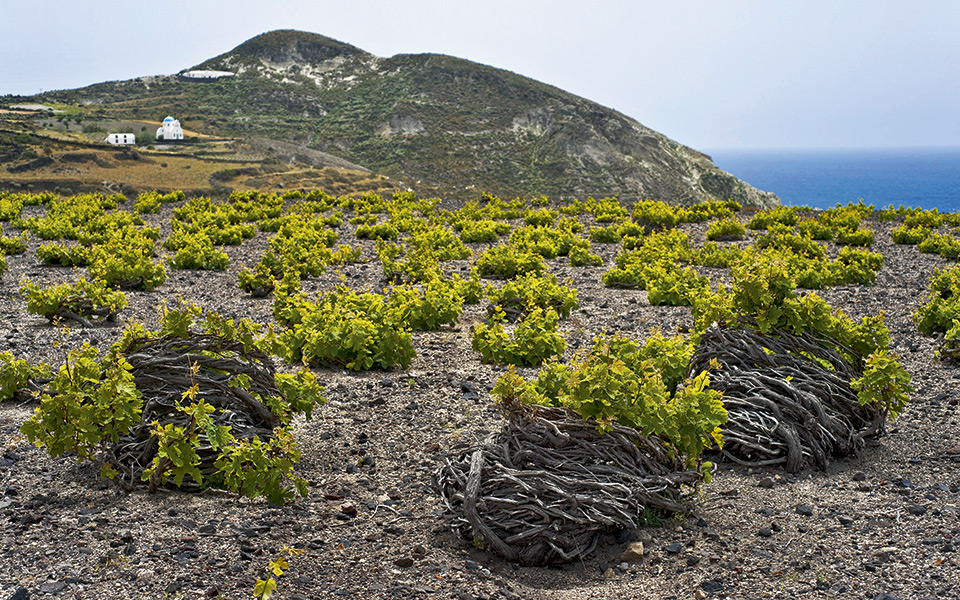
Despite hordes of Birkenstock‑and‑sandal‑wearing Germans, garish hotels and the omnipresent scent of coconut sunscreen and watermelon vapes, Santorini is seen as cute, off‑beat and authentically Greek. Here, a few withered old vines gasp in volcanic soils; they happen to be Assyrtiko, and from them the much‑vaunted Santorini wines are made — one of the wine world’s supposed “next big things”.
I didn’t think much of Santorini Assyrtiko when I worked on the island as a donkey‑handler for tourists too lazy to walk up from the port to the town, and my view hasn’t altered. Back then — four decades ago — I reckoned Santorini Assyrtiko resembled entry‑level KWV Steen, but with a sharper acid claw. Today’s wines are slightly better, with more structure and texture, yet remain as unremarkable as a lukewarm souvlaki bought outside Camden at three in the morning.
To see what Assyrtiko could be, travel some way south from Santorini: to South Africa, to Stellenbosch. At Jordan Wine Estate the first Assyrtiko block was planted in 2019 and, since 2024, winemaker Sjaak Nelson has been vinifying it into a thoroughly delicious white, thankfully devoid of the obvious Greek traits. (Although Sjaak’s hairdo and tattoos would not look out of place in the Athens district of the Plaka.)
Jordan Assyrtiko 2025 is fermented in stainless steel and spends a couple of months on the lees. The result is a well‑weighted white leading with traits not found in local South African favourites such as Chenin Blanc, Chardonnay or Sauvignon Blanc.
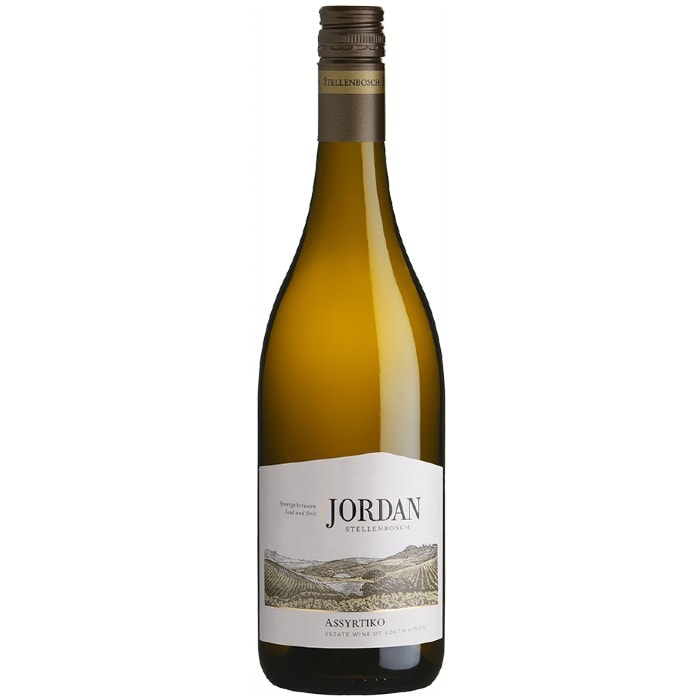
Unlike the fishy, saline residues that appear in many Greek Assyrtikos, Jordan’s wine is floral, pure and delicate, with punchy loquat and lime zest to keep things interesting. It is stony without being jagged, tropical without oiliness, and green without the lettuce‑and‑olive‑pit character of Santorini’s renditions. Beyond Santorini’s myopic singularity, Jordan’s Assyrtiko offers layers of lushness and a mannered sophistication that makes it, like actress Rosamund Pike, gluggable yet classy.
No, Assyrtiko is never going to be the world’s greatest variety, nor Greece’s answer to Portugal’s modern Alvarinho revolution. But the ease with which it has adapted to Stellenbosch and the pleasing way it has translated into the bottle again shows that South Africa is a wonder of a wine country. Seven years after first being planted there, and now producing a better wine than its ancestral home…this may be Greek to some, but for me it’s a no‑brainer.
Enjoyed this article?
Subscribe and never miss a post again.
Kapow!