
Italy’s Alto Adige province in the nation’s northern parts can, even by Italian standards, be a place of confusion. Road-signs and place names are shown in Italian and German, and the local inhabitants speak Italian with German accents, as well as emitting Germanic phrases with a romantic Italian slant. Pizza and pasta are sidebars to menus focussed on hearty meat-driven dishes such as veal with tuna sauce, bloody mounds of steak tartare and aromatically bloody portions of venison and game-birds.
But then one must think of the history of Alto Adige, also known as South Tyrol. Up until 1914 this was Austria. Then the Italian fascist regime decided they’d like a piece of mountainous Austrian real estate, taking over the region and incorporating it into the Italian empire. Thus, the apparently seamless combination of Italian and Austrian culture adds to the distinctive and visceral natural charm of Alto Adige, which is also one of Italy’s leading wine regions. Arguably its best white wine area, although with the diverse range of other loyal and patriotic provinces looking on, you don’t want to say this too loudly.
And this was exactly why I found myself there a week back, together with Thys Louw, proprietor and winemaker of Diemersdal, and his wingman in the cellar, Juandré Bruwer. The red wines of Italy, Barolo and Super Tuscans especially, are world famous. Whites? Not so much. But, as we discovered in Alto Adige, some of the world’s finest white wines can also be found in this country of vinous multitudes, and if proof is needed, it is right here up north.
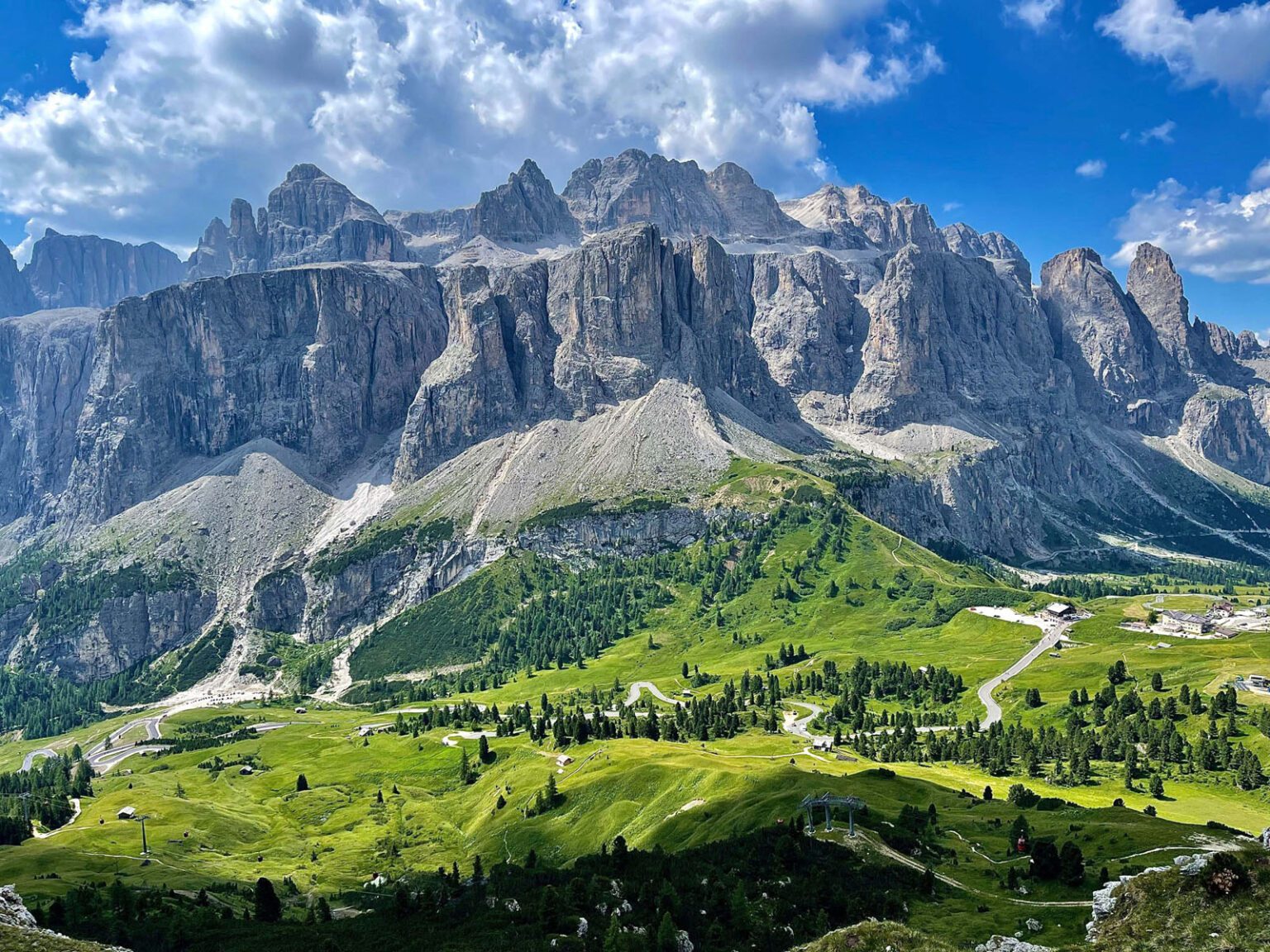
Our base was the town of Merano, a quaint, ancient spot at the end of a spectacular valley. And make that Valley with a capital, as there is some serious mountain action going on here in Alto Adige on account of the province being home to the Dolomites.
The valley floor is flat and even and broad, covered with thousands of apple trees bearing the region’s other agricultural commodity outside of wine. On each side of the valley bed, mountains climb high and steep and seemingly endless, over 3000m, with vineyards clinging to the glistening smooth rock faces to altitudes touching 1000m. Standing on the valley floor you sense mountain and rock and big things making you feel very small, which is indeed your place in nature. It is a wondrous cathedral under open, broad azure skies.
Lots of wine-tasting was done, the first stop being Cantina Terlan, one of the oldest and most reputable wineries in the region. Like most, Terlan is a co-operative, a small one by South African standards. With 143 producer-members farming under 200ha of grapes, Terlan can lay claim to being a boutique co-operative if the term existed. The boutique refers not only to size, but to mindset: 40 years back the various Alto Adige co-ops decided to get rid of innocuous bulk varieties, plant what the world wants and what the area can do well, and focus on premium quality wine. The result? In three days of extensive Alto Adige immersion, our party did not taste a single wine that was not of extraordinary quality. And all bar one were made in co-operative cellars.
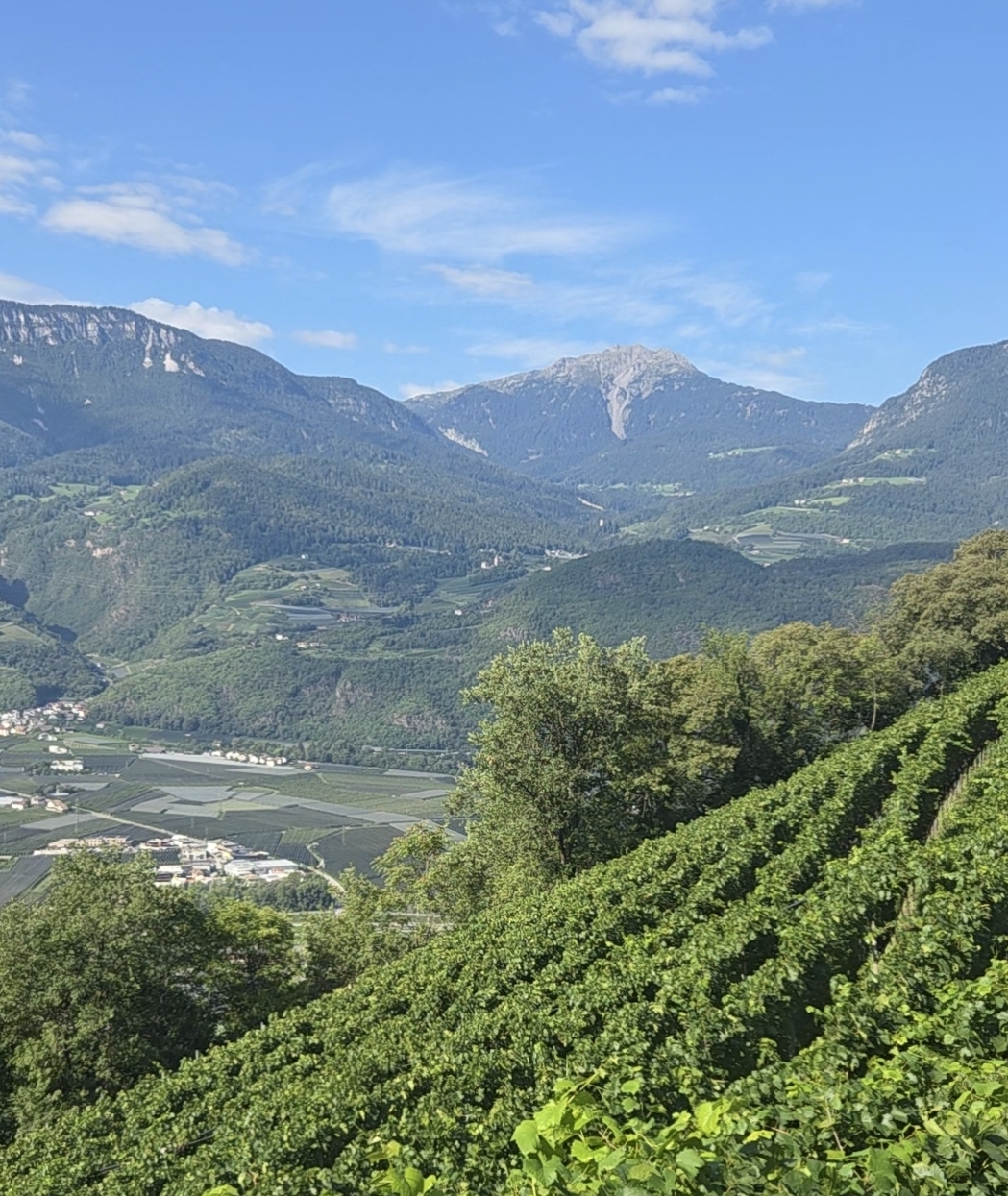
Main grape varieties at Cantina Terlan are Pinot Bianco, Chardonnay and Sauvignon Blanc, the latter being the reason the Diemersdal crew ended up here, and the lay of the vineland leading to the wines is interesting from a geographical point of view. All vines are grown on the mountain slopes, and as has already been alluded to, there is a different mountain on each side of the valley.
The rock on the east side is of volcanic origin comprising quartz porphyry bedrock and hence more acidic than an Italian mamma’s tongue after you’ve asked for Tabasco with the Carbonara. On the other side of the valley, the high mountain is pure limestone. With Terlan’s growers scattered on both sides of the valley, the winemakers thus have access to fruit of startlingly differing chemistries, assisting in the creation of truly extraordinary wines.
Two of the best wines tasted from Terlan:
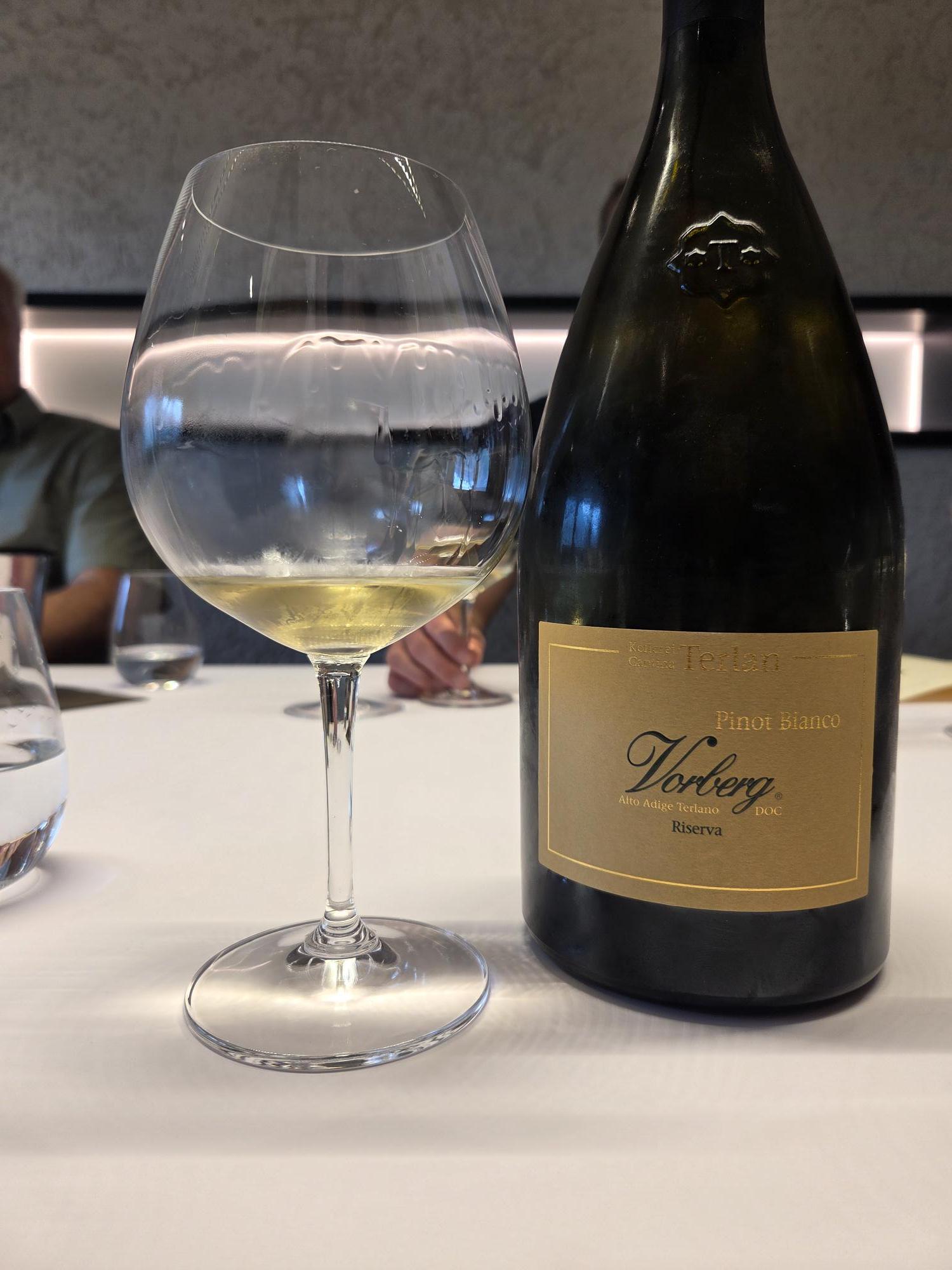
Vorberg Riserva Pinot Bianco 2023
The Vorberg wine comes off the amphitheatre where Terlan’s vineyards climb steeply from around 450 to 650 metres, facing south to southwest on slopes that tip past a steepness grading of 70% in places. It’s a demanding site to farm and that’s rather the point: Pinot Bianco planted this high, on ground this steep, has to work for every gram of sugar, and the wine shows it. And this is what makes Alto Adige Pinot Bianco worth seeking out, as the extreme geography and natural stress the vines are put through allow this variety to shift past that point of comfortable neutrality it so often sticks to.
Climate, too, plays a huge role in the vineyard offering. The main Alpine chain shields Terlan from Atlantic weather and cold northerlies, while the valley opens south to Mediterranean influence, and the result is a genuine day-night temperature swing driven by cool downslope winds off the mountains. With a westerly to south-westerly exposure, the sun is already high by the time it clears the ridge, giving more direct light and less diffusion, which sharpens the contrast between this side of the valley and the shadier slopes opposite.
In the cellar the approach stays deliberately unhurried. Grapes are picked and sorted by hand, pressed gently as whole clusters, and the must is left to clarify by natural sedimentation rather than filtration. Fermentation runs slow, at controlled temperature, in large oak casks, a 700l and a 300l barrel doing the work rather than small new wood. Malolactic fermentation follows, then twelve months on the lees in traditional wooden barrels before release.
The result is a white wine of vivid clarity that tastes of cool and of forest and of rock. You can hear the rising trout make huge splashes as they jump in their river pools; you can feel the mist rising off gushing streams. And it tastes lovely, the crispness being taut and echoing, instead of sharp and brief. Runs of quince and green pear peer from behind veils of spring orchard blossom, with a kind coil of salinity. A complete white wine.
Quarz 2024
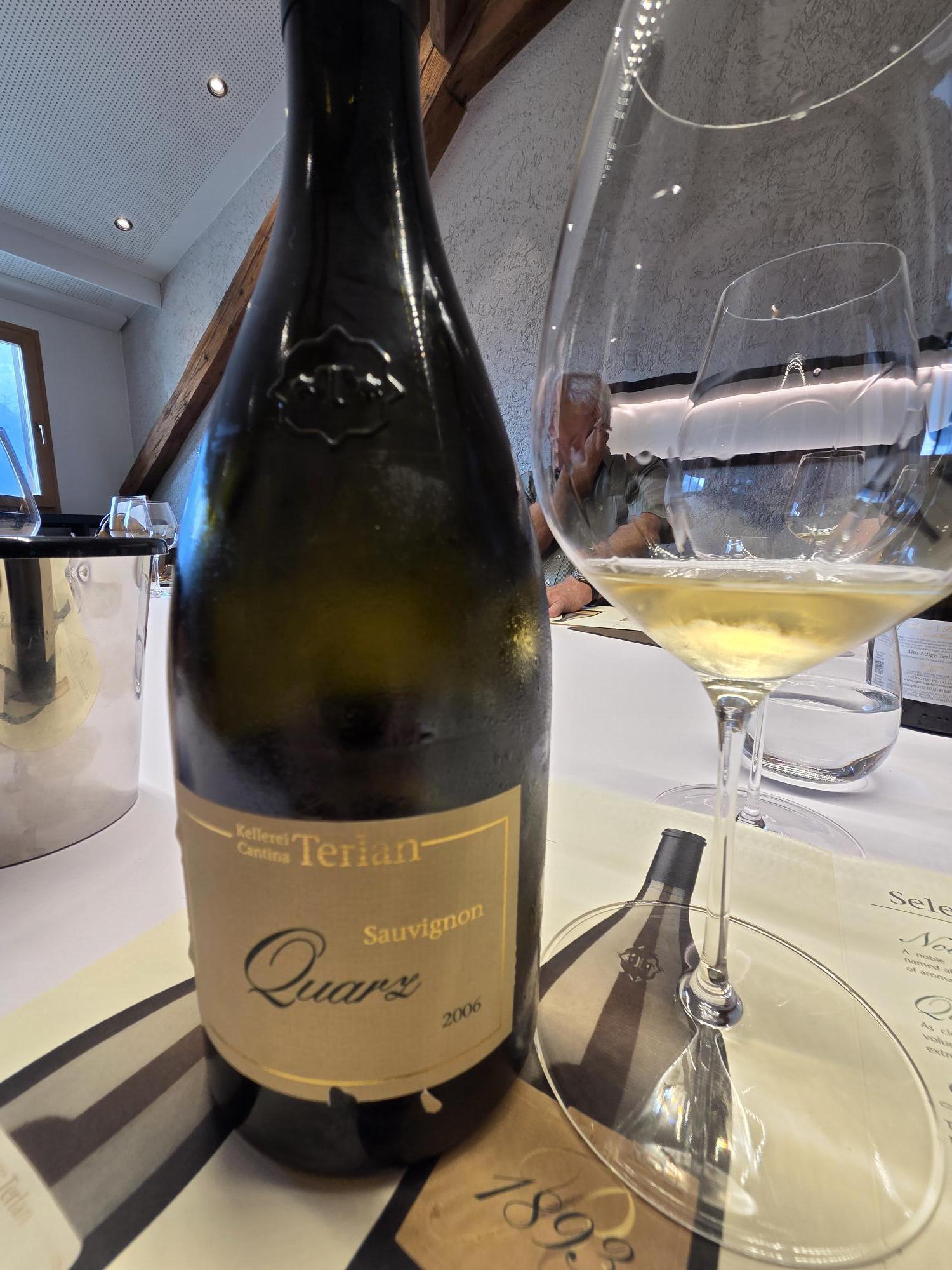
Quarz comes from Sauvignon Blanc planted on south to southwest-facing slopes, between 300 and 550 metres, on gradients that range from a gentle 10% up to a calf-cramping 40%.
The mountain’s mineral poverty is seen as a major role-player in the finished wine. Terlan winery’s research into these soils points to a subvolcanic body beneath the vineyards that behaves differently from typical Alpine volcanic rock, and the scientists attribute the wines’ saltiness and tension to the vines’ own reaction to that stress.
In the cellar the fruit is picked and sorted by hand, then pressed gently as whole clusters, with the must left to clarify through natural sedimentation rather than mechanical filtration. Fermentation runs slow and at controlled temperature, and the wine spends nine months on its lees split evenly between large wooden barrels and stainless steel. The two halves are blended three months before bottling.
Being the first Sauvignon Blanc tasted on the trip, the Terlan Quarz 2024 immediately announced the fact that, as lovers of this variety, we had come to the correct address, here in Alto Adige.
It is an extraordinary Sauvignon Blanc. The growing matter may be poor and rugged and mountainous, the slopes steep and unforgiving, but the wine has an immense amount of kindness offering a degree of goodwill instead of overt fruit-driven generosity. Not a breath of pyrazine is present in the wine, nor any cut-grass or tinned-pea. No restlessness in the wine, whose presence in the mouth was complete and full without any impressionable showiness. I tasted a sprinkling of ruby grapefruit and a wash of thick lemon peel, but these were subtle sideshows to a wine of alluring and confident complexity, broad and satisfying and totally mesmerising. Simply put, another wine from another region underscoring the fact that Sauvignon Blanc is one of the world’s great grape varieties for winemaking. And absolutely no confusion about that.
Enjoyed this article?
Subscribe and never miss a post again.
When wine is produced not as a commodity, it is so wonderful to enjoy. Hope the world learn from this special pockets of terroir and attitude towards wine production. Well done for Diemersdal to evaluate and study such places.
A fascinating description of exploring a different region.