
Of my first childhood visit to Paris, recalling the earthy smells mingled with burnt coffee and strong cigarettes, the language’s musical flow, the continental roar of life and the people’s clothes, what I especially remember is our last morning, a Sunday. My father and I took one of the Metro trains, one of the old 1970s versions with wooden floors and hard benches with horizontal slats, off to Montmartre, the peak of Paris where the basilica-cathedral of Sacré-Cœur stands. The rest of the family had gone to the Champs-Élysées to buy tourist souvenirs.
To reach the cathedral from the Métro station, we walked through narrow alleys up the hill towards the imposing white, elegant dome-shape of the church. The smell of aforementioned coffee and black cigarettes hung in the air, with stout uncles with dark unshaven cheeks already drinking small glasses of cognac with their coffee early in the morning.
Inside the church my father was quiet, and pointed out the decorated stained-glass windows to me, the weak winter sun striking the red and blue and orange glass from outside and then pouring the light in a bewildering range of coloured rays into the dark space of the cathedral. Christ looked on.
We each lit a little candle and then walked back down the hill of Montmartre, this time through a different maze of alleys from the one that had brought us from the Métro to the church.
It was here, in Paris, far from the ocean, that I had my first encounter with the oyster.
I had often heard my parents talk about oysters, these some edible things from the sea. If I think back carefully, I can also remember that it had been conveyed to me somewhere that the oyster lived in a shell, and that it was a sought-after, expensive eating affair. Eating this thing, as seen on TV, apparently required drinking Champagne. I probably also read about oysters and Champagne in some James Bond book, since from my arrival in England I had made short work of the stories about Ian Fleming’s flamboyant hero.
And there he stood, the man selling oysters. Here in the heart of Paris. On the narrow pavement outside a shop where sullen-looking housewives queued to buy fish lying, as in London, on beds of shaved ice.
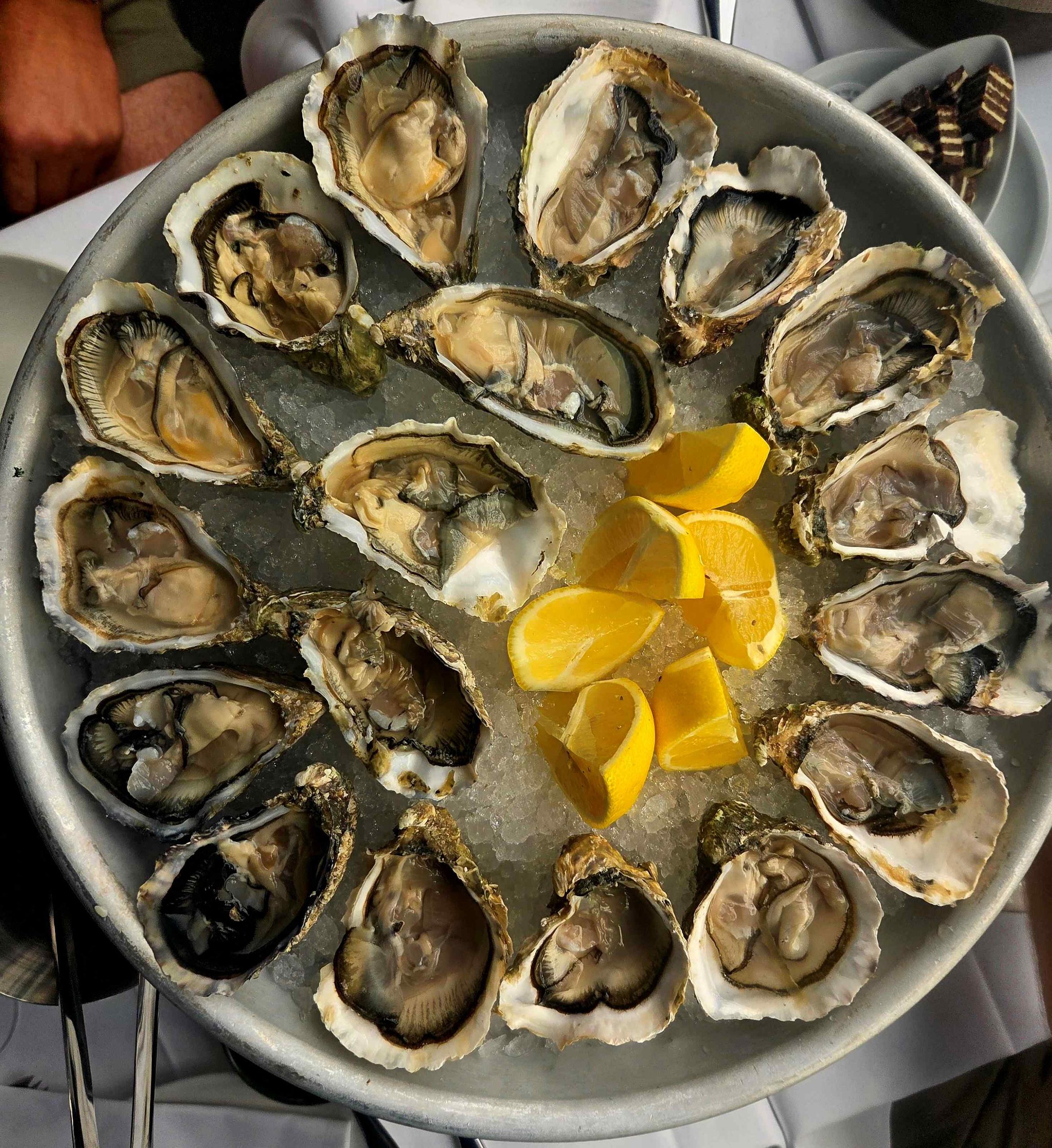
My father stopped in front of the oyster man while I looked at the flat green-grey shells stacked in the basket on the ground. Beside the man was a table with a few bright-yellow lemons the colour of pale morning sun. A chalked blackboard showed numbers. I remember the “6” and the “12”. My father’s finger came to rest on the six while the man watched. Then the man picked up one of the shells from the basket and showed it to my father. My father nodded, and I watched as the oyster man pushed his short, thick little knife with the triangular point through the opening of the shell and, with a nimble movement of the hand, snapped it open.
Right there my father grabbed one of the lemon wedges, squeezed juice onto the shell and, good heavens, lifted the shell to his mouth and sucked it out.
When he asked why I was looking at him so strangely, I said I thought the oyster — the thing he had just sent into his mouth — surely had to be cooked first. He smiled, shook his head, and when he looked at the oyster man, the fellow was already ready with the next opened shell. My father indicated that the man should give the thing to me, and the old chap bent down and held the oyster shell out in my direction and said something in French I did not understand, though I could hear the kindness behind it.
I took the shell and peered into it. Something that looked like a white-grey, flattened snotty ball lay in the shell, light dancing on the wet, slimy object. From the round fat piece in the middle, strands of translucent slime ran to the edge of the shell, the edges of the slime bordered by a fine ridged thread that looked like minute curls of black cotton. The old man’s hand moved between me and the oyster, the flash of the yellow lemon wedge catching my eye. When the juice struck the oyster, the ball of slime actually drew in its little muscle, as if the burn of the lemon juice irritated it.
Christ, a raw gooey blob – no wonder it required the accompaniment of Champagne.
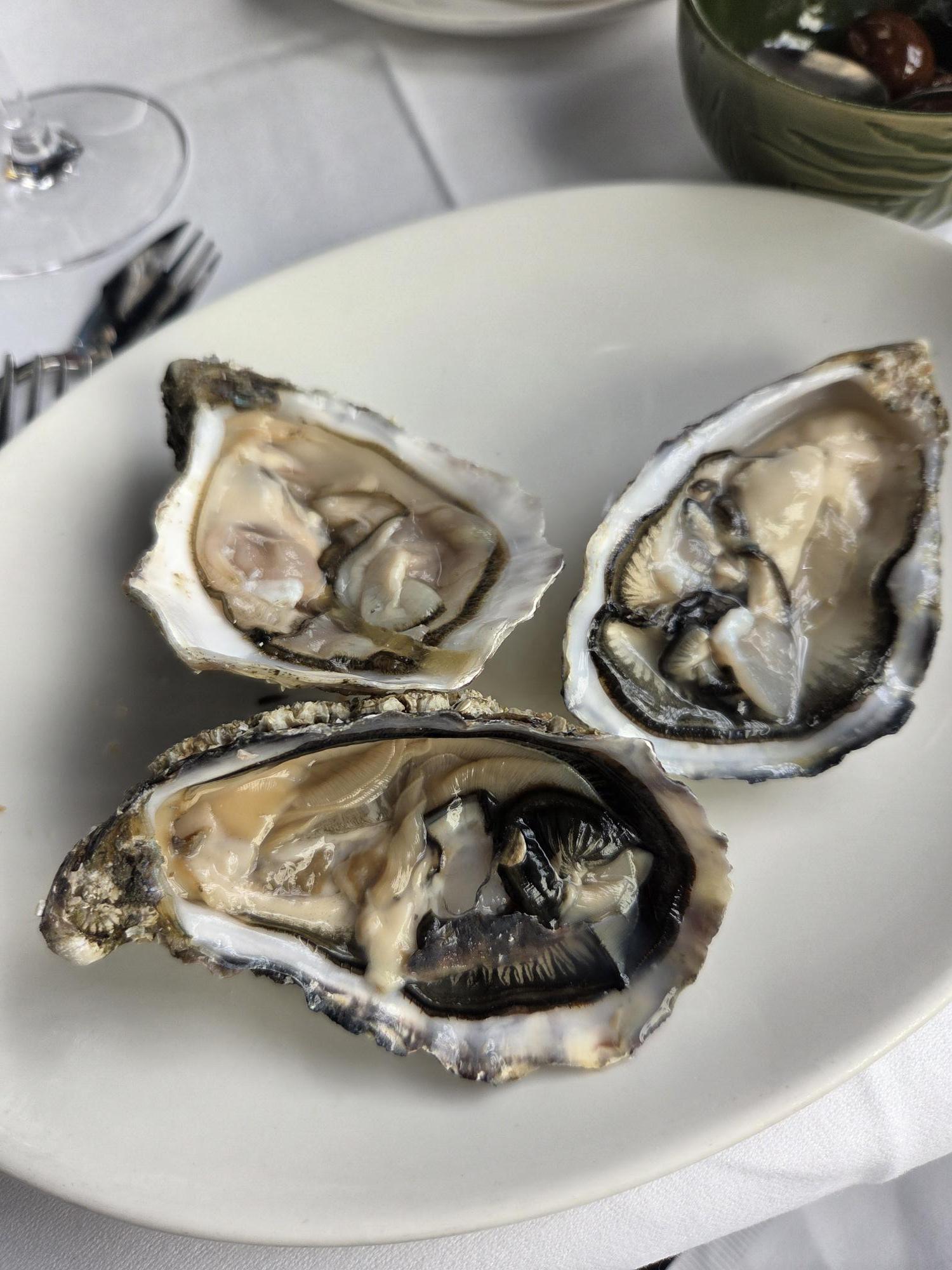
But, I decided, it was now or never. I was not going to chicken out before the old man and the and burly French oyster-seller. I put the shell to my lips as I had seen my father do, threw back my head and felt the cold wet ball of sea creature slide into my mouth.
When the cool, wet raw flesh entered my mouth, something happened. It was as if I swallowed a wave, heard the cry of seagulls. Dived beneath the surface of cool, deep rock pools and entered another marine world, with Jacques Cousteau waiting for me behind a forest of seaweed. The taste of salt and sea air; shell and seaweed. The feeling of fine, soft and delicate flesh between my tongue and palate. It was not food or eating. It was experiencing something through your mouth and taste. As if that one oyster had offered the full power of the ocean to my senses. Here, on the narrow pavement outside a fish shop in Paris.
Now, every time I return to Paris, I put my luggage down in the guesthouse room. With light shoulders and bubbling joy, I join the rolling rhythm of my beloved city. I walk until I find a place, somewhere, where the familiar grey-green shapes lie on carved ice. Someone will pull the shells open with that short blade. I drip my own lemon juice onto the gleaming wet slime-flesh, and watch it pull in its little muscle in irritation at the sour drops. In my mouth, I taste the deliciousness, the senses struck by the flavour of now, and the memory of what was, and always will be.
Enjoyed this article?
Subscribe and never miss a post again.
What a lovely article, it placed me right back on the streets of Paris